For Services
Defend your firm and every client behind it.

00:32
+1 (212) 555-0181
IT Help Desk
“Hi, this is James from IT security. We’ve flagged your account for suspicious activity and need to verify your credentials quickly.”


Train the whole team, not just the obvious targets.
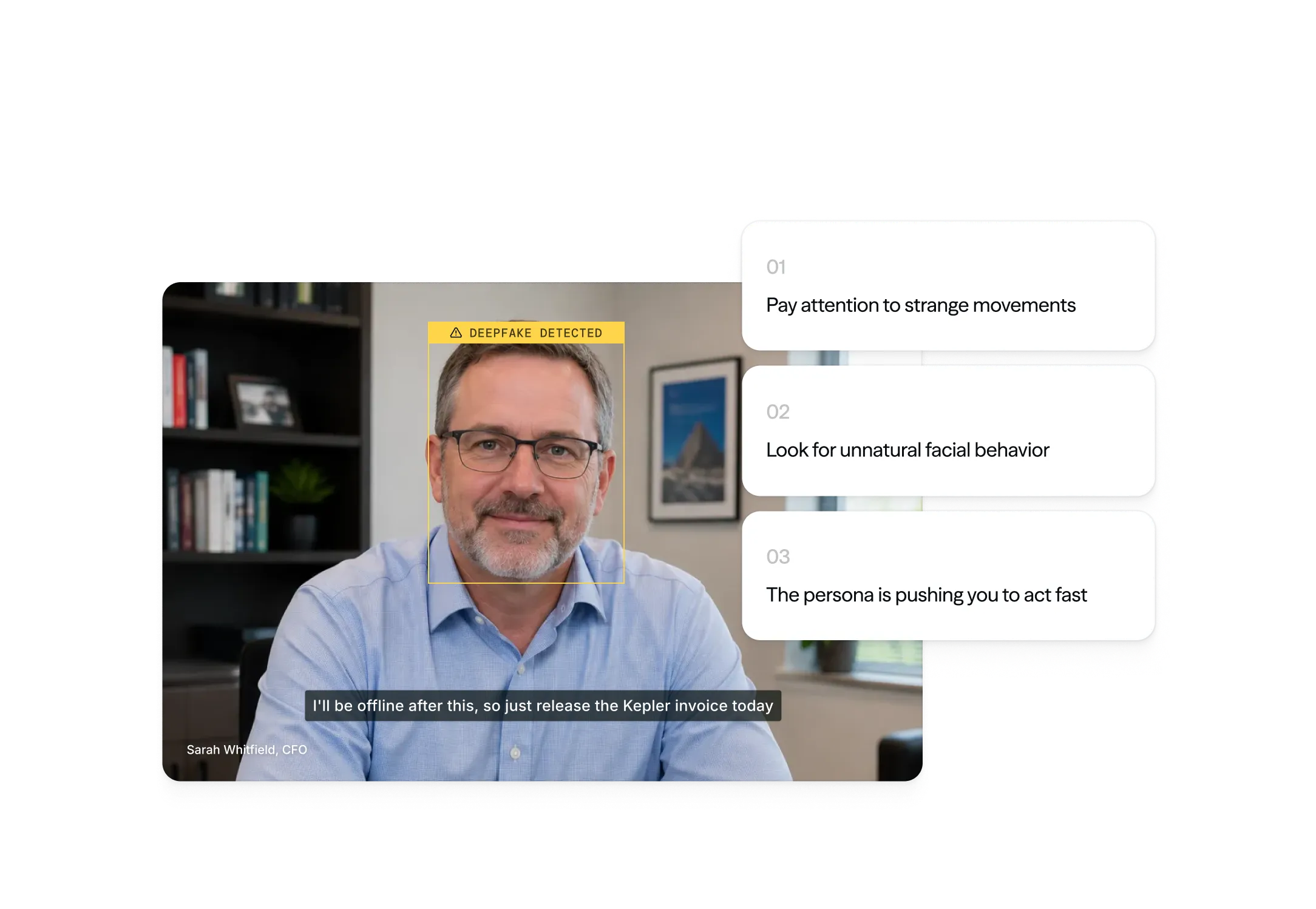
Security Awareness Training
Prepare your team against AI social engineering with interactive training
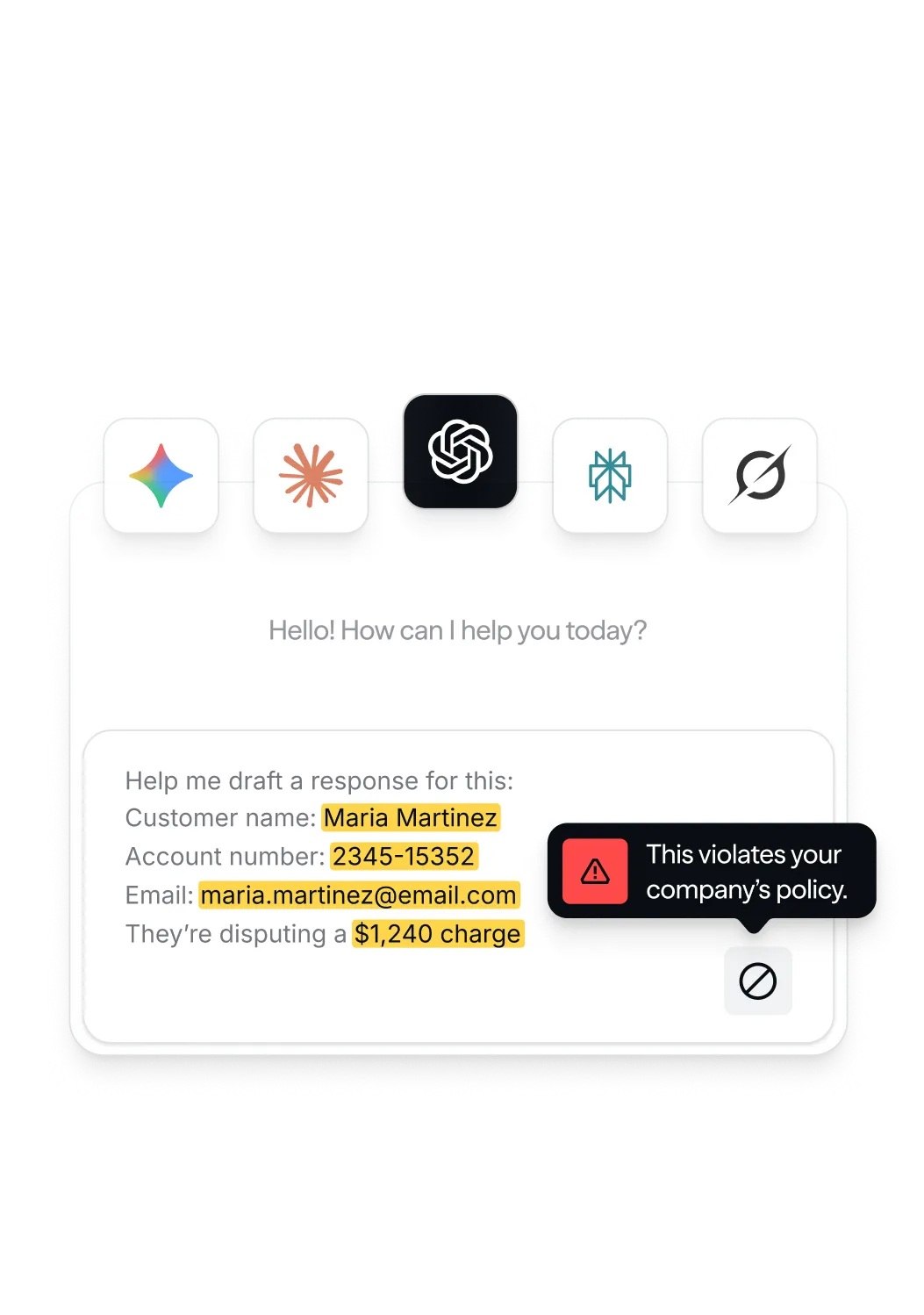
AI Governance
Secure risky AI usage and rogue agents
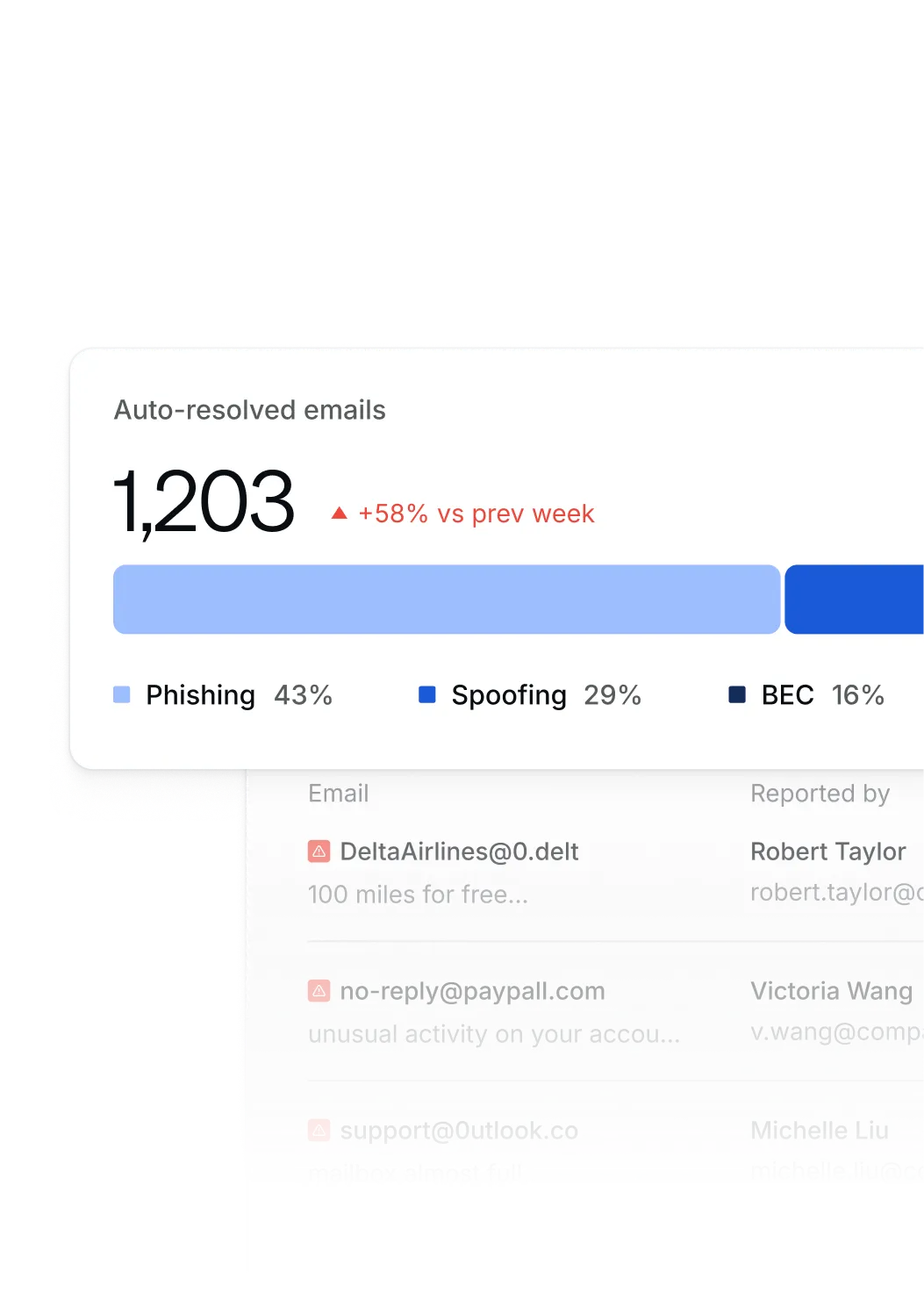
Phish Triage
Remediate user-reported phishing
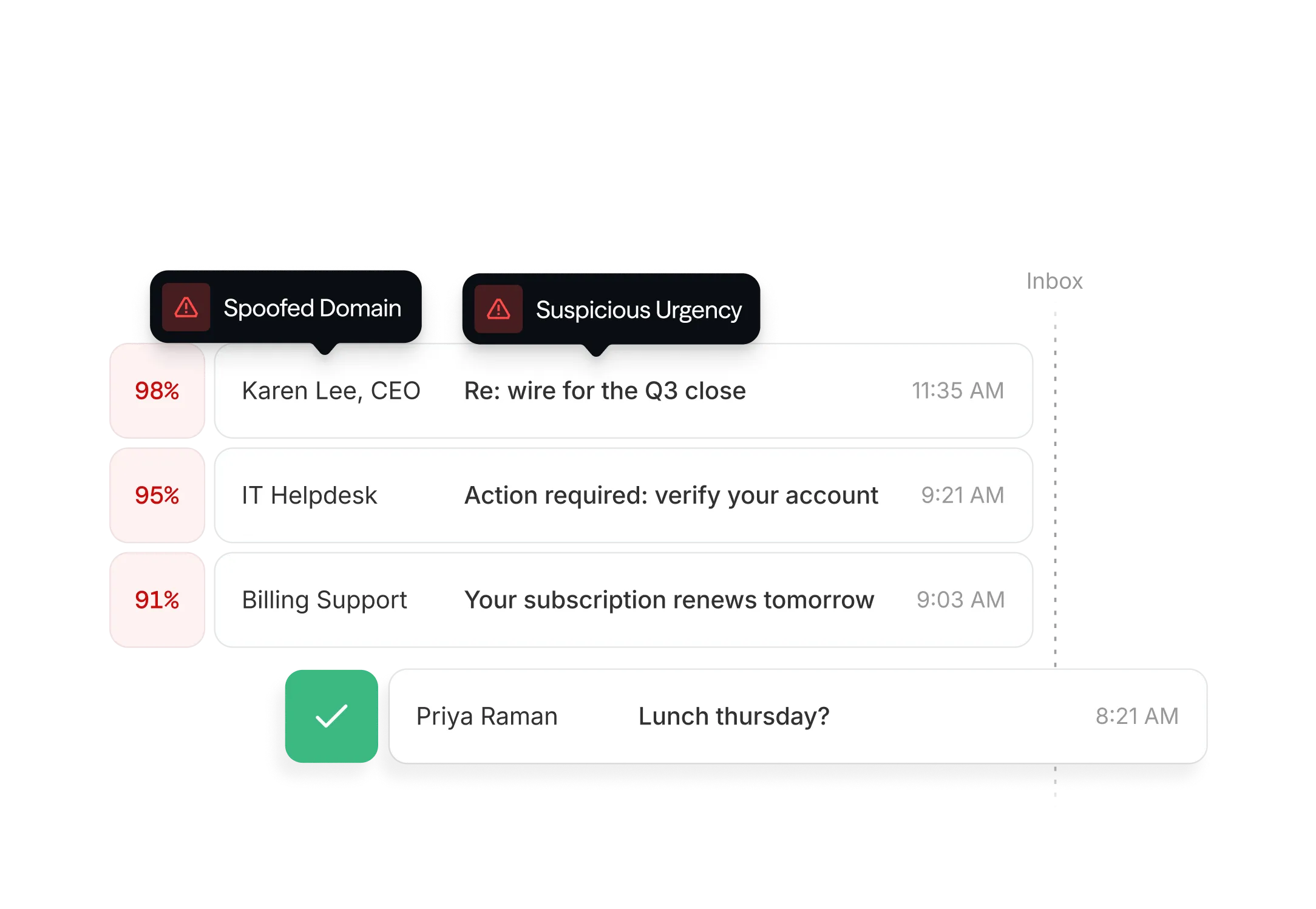
Agentic Email Security
Stop sophisticatedAI-powered email attacks
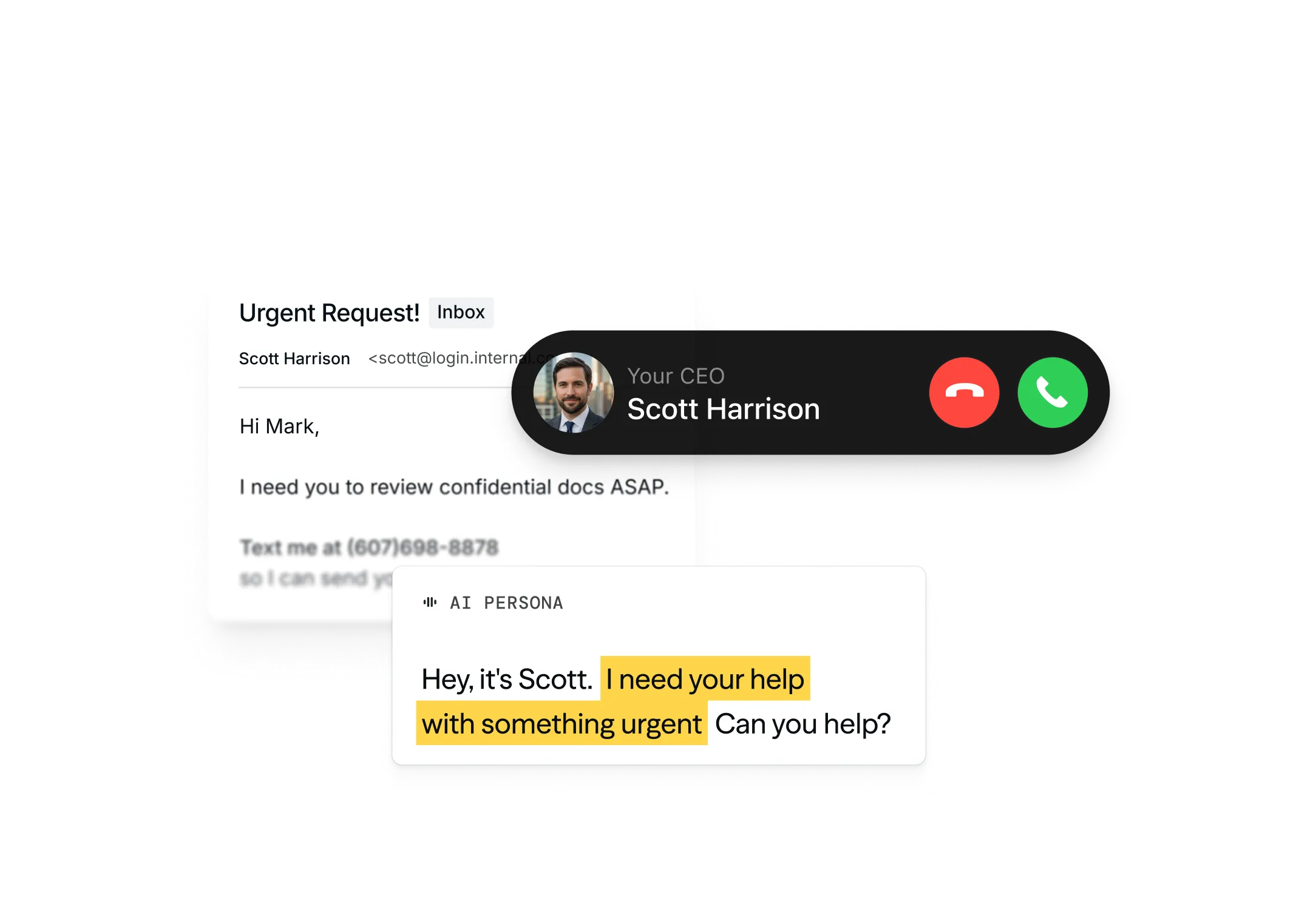
Phishing Simulations
Simulate multi-channel phishingattacks with AI
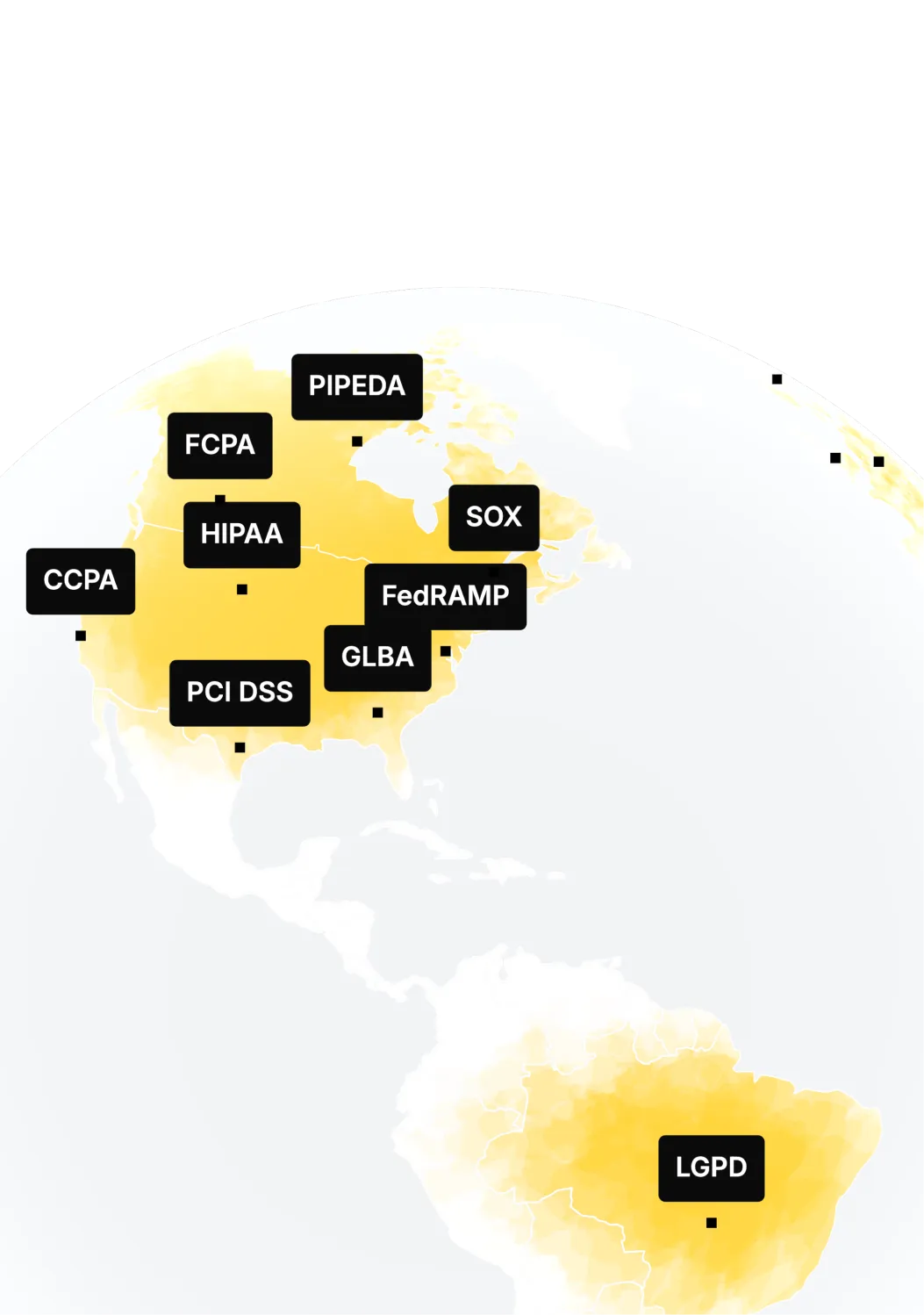
Compliance
Train for every regulatory framework
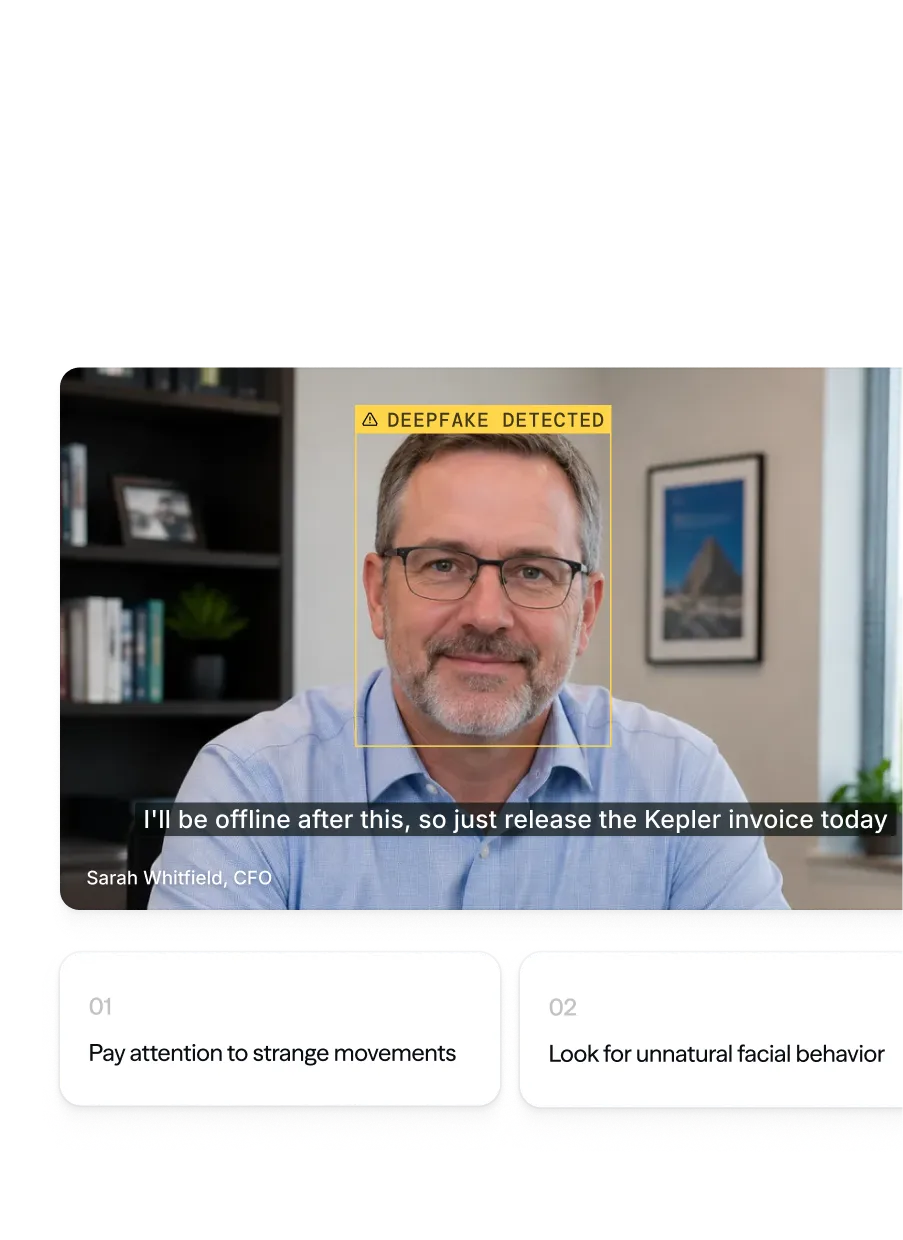
Security Awareness Training
Prepare your team against AI social engineering with interactive training
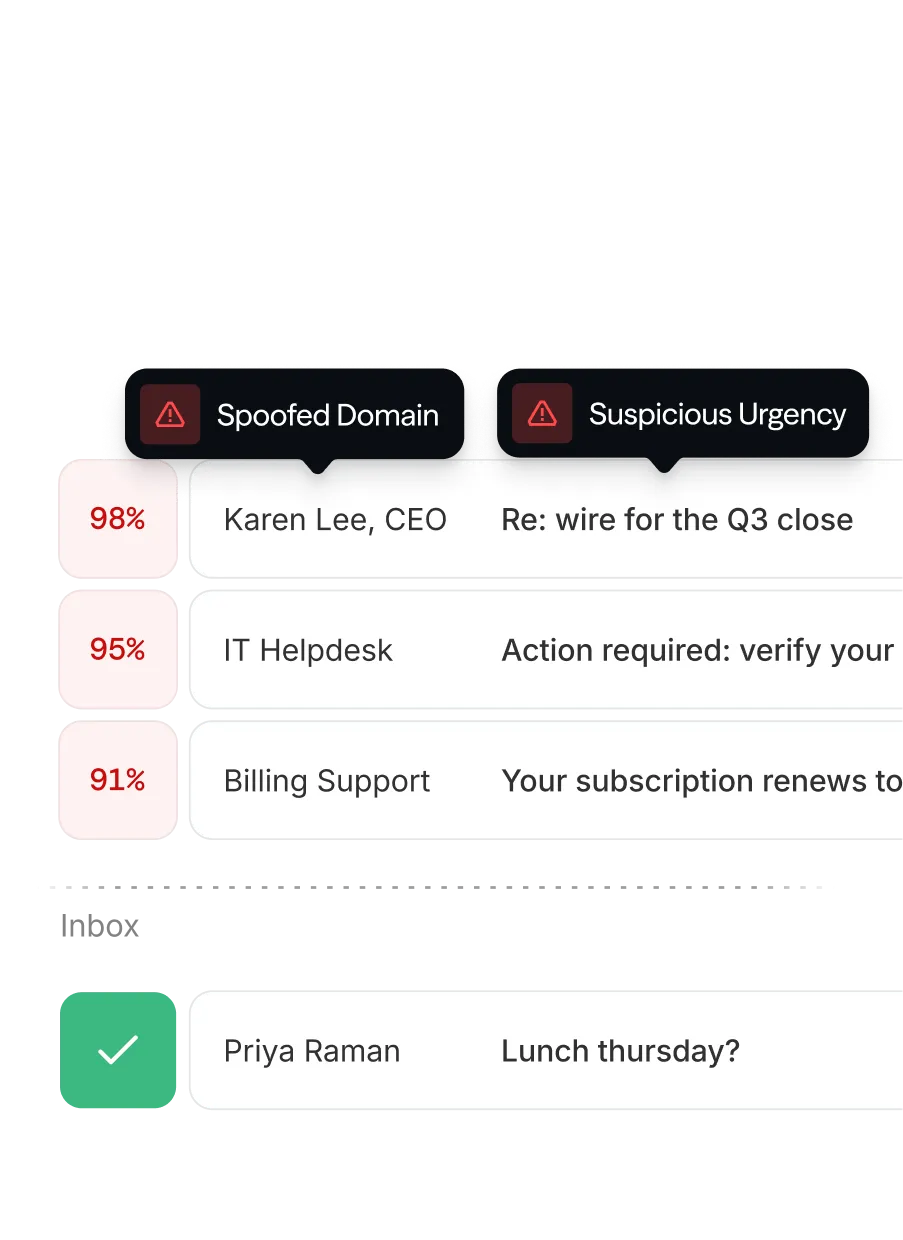
Agentic Email Security
Stop sophisticated AI-powered email attacks
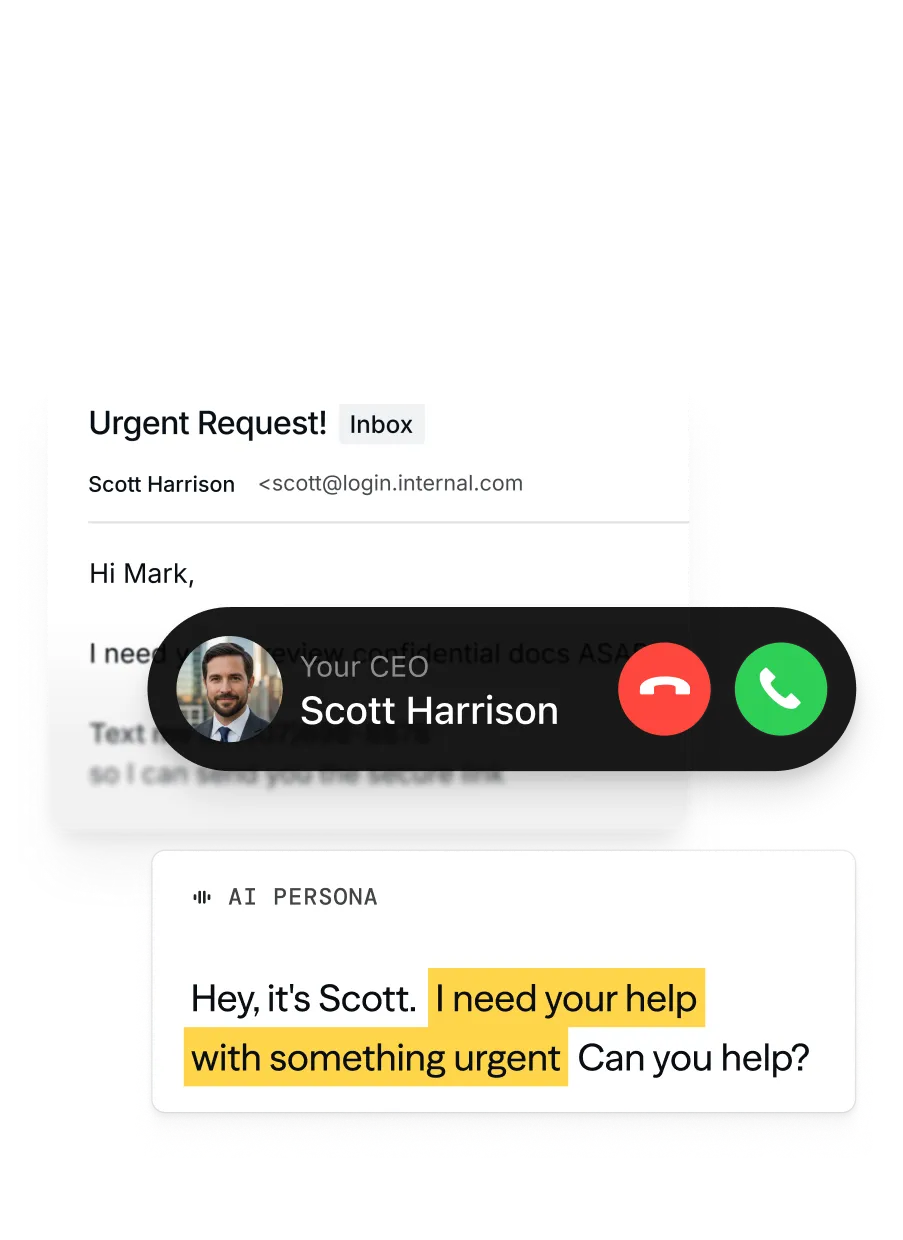
Phishing Simulations
Simulate multi-channel phishing attacks with AI
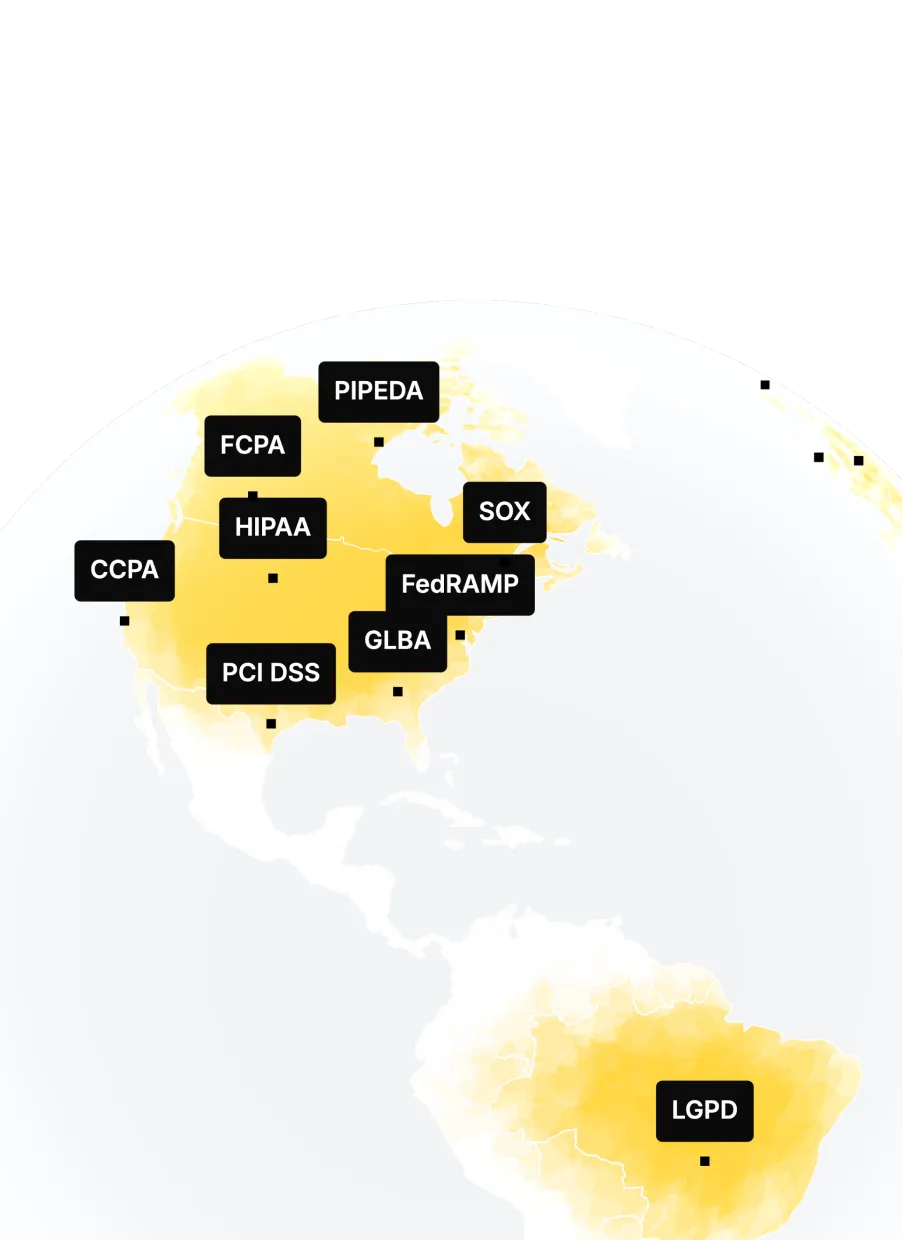
Compliance
Train for every regulatory framework
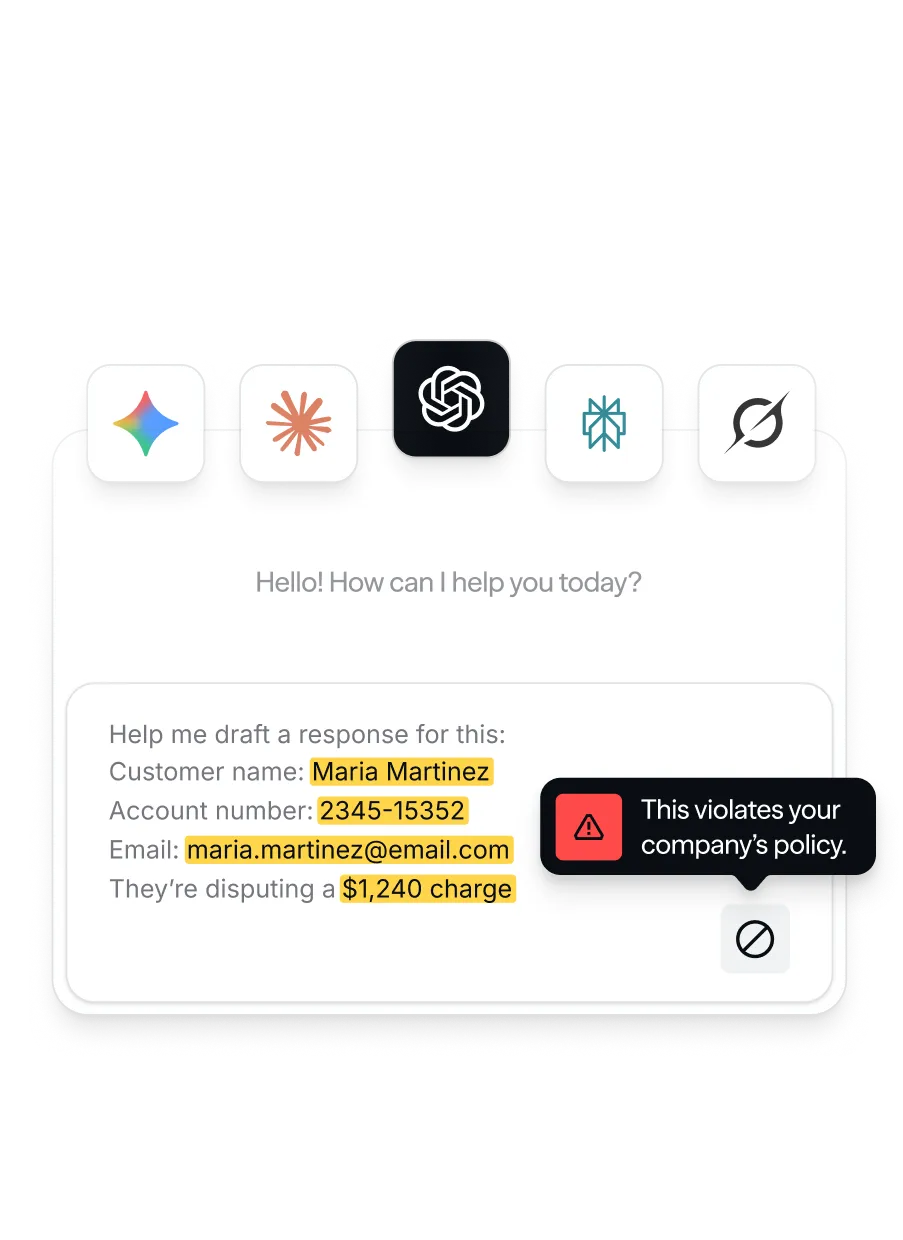
AI Governance
Secure risky AI usage and rogue agents
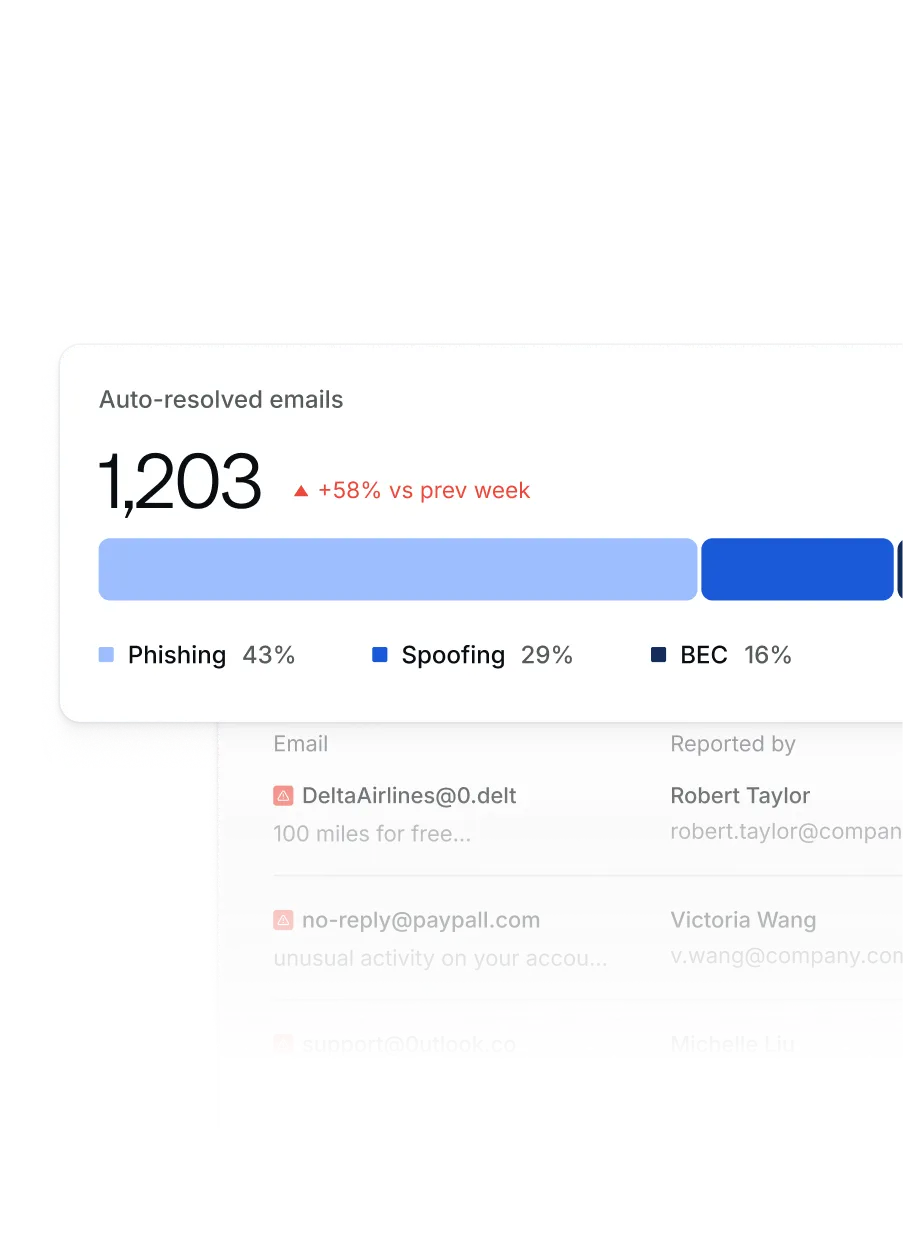
Phish Triage
Remediate user-reported phishing
Security Awareness Training
Prepare your team against AI social engineering with interactive training
Agentic Email Security
Stop sophisticated AI-powered email attacks
Phishing Simulations
Simulate multi-channel phishing attacks with AI
Compliance
Train for every regulatory framework
AI Governance
Secure risky AI usage and rogue agents
Phish Triage
Remediate user-reported phishing

Kandace Andrews
IT & Controller, Integrated Power Company
Our account executive and the implementation team were excellent to work with. They were flexible to meet us where our needs were and made the choice a no-brainer!
Frequently Asked Questions.
Services firms face targeted social engineering attacks aimed at client-facing and sales teams, voice phishing attacks impersonating IT or help desk staff, and data leaks through compromised credentials. Because these teams regularly handle sensitive client data and communicate with clients daily, they are a high-value target. Adaptive trains employees on all of these scenarios and runs simulations built on real employee data and OSINT.
Yes. Adaptive's AI content creator lets you build training modules from your own internal policies and workflows, so the content reflects how your teams actually operate rather than generic scenarios that do not land. Simulations can also be tailored to target specific teams with scenarios relevant to the platforms and clients they work with day to day.
Adaptive runs spear phishing simulations tailored to these teams using real employee data and OSINT, and delivers a short micro-lesson immediately after any failure so employees understand exactly what they missed.
Yes. Adaptive automatically enrolls new employees in training as they join, so security awareness is embedded from day one without requiring manual setup from your team each time someone starts. New hires also receive a temporary risk adjustment in the platform until enough behavioral data is collected to establish their baseline.
Adaptive trains employees to recognize the social engineering tactics most commonly used to gain access to client accounts and sensitive data. These include vishing calls impersonating IT staff, spear phishing emails crafted from publicly available information, and deepfake impersonation. Risk scoring identifies which employees are most likely to fall for these attacks so security teams can prioritize training before an incident occurs.

