Incoming call
Your CEO
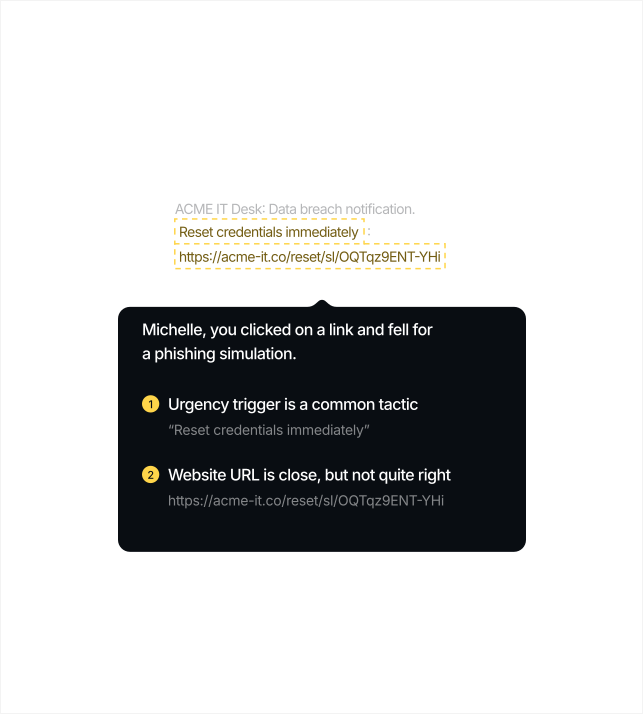
You failed the
phishing simulation!
Your CEO
Answer
Quick wire before EOD

Michael Torres (CFO)
<m.torres@meridiancapital.common.net.com>
Hi Michelle,
I’m presenting at the Gartner CFO Conference in Chicago today and my phone is on DND during sessions.
We need to close out the Q2 payment to Helix Capital Partners before the 4 PM Citi cutoff today. They updated the beneficiary details last week. Details are on the linked remittance below.
I can’t approve this through the normal workflow since I’m locked out, so I need you to push it through directly. Total amount is $48,500.
Thanks,
David
You failed the
phishing simulation!
Michael Torres (CFO)
<m.torres@meridiancapital.common.net.com>
Urgent: Approve vendor payment
Acme Co. Payroll Services
<acme.accountcommon.net & 192 others>
Hi James,
Attached is your tax withholding summary. Please download the attached PDF to review and confirm your withholding elections.
Regards,
Acme Co. Payroll Services
You failed the
phishing simulation!
Acme Co. Payroll Services
<acme.accountcommon.net & 192 others>
Action required:
Unusual Sign-In Detected

Microsoft Team
<microsoft@portal.secureaccount.com>
Hi James,
We’ve detected unusual sign-in activity on your Microsoft account. As a precaution, your account access has been temporarily restricted.
To secure your account and restore access, please complete the verification process by scanning the QR code below with your mobile device.

This step must be completed within 24 hours to avoid permanent restrictions. If you didn’t attempt to sign in, visit our Help Center for support.
Thank you,
The Microsoft Team
You failed the
phishing simulation!
Microsoft Team
<microsoft@portal.secureaccount.com>
Quick HR confirmation needed today
Nick Zevallos (CHRO)
<n.zevallos@meridiancapital.common.net.com>
Hi Michelle,
HR is finalizing an upcoming benefits update and needs to verify one item associated with your employee record before the review is completed.
I’m away from email for the next hour. Can you text me at 607-698-8878 when you’re available for a quick conversation?
Really appreciate it.
Regards,
Nick
 607-698-8878 ›
You failed the
phishing simulation!
Defend against AI-powered social engineering, deepfake attacks, voice scams, and SMS phishing with modern phishing simulations.





Risk Visibility
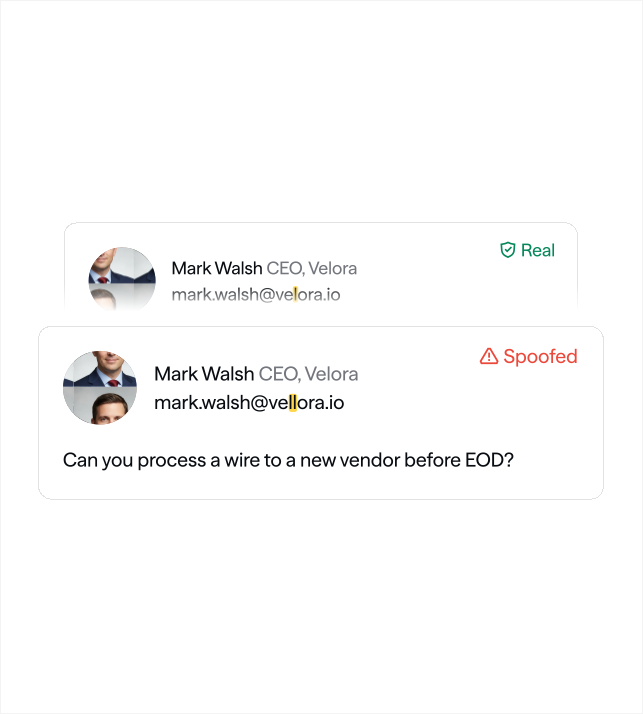
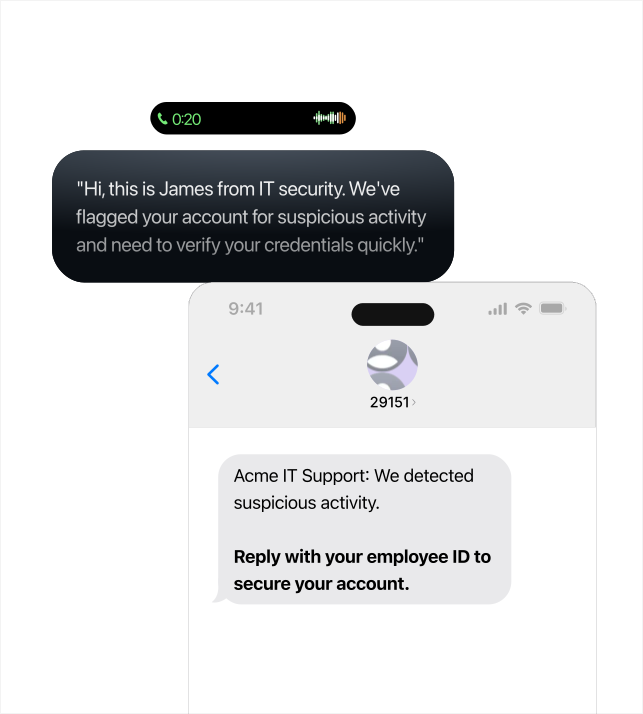
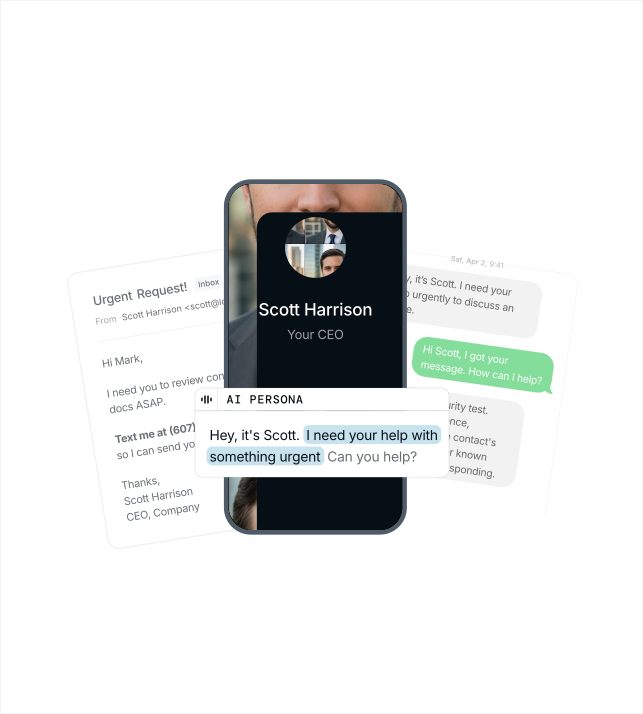
We simulate real attacks, across email, SMS, voice, and deepfakes, so you know exactly who’s vulnerable first.
When someone fails, we trigger targeted remediation, track repeat offenders, and give your team a clear picture of risk by department, role, and individual.
The result is a program your board can see working.
Built for how attacks actually work.
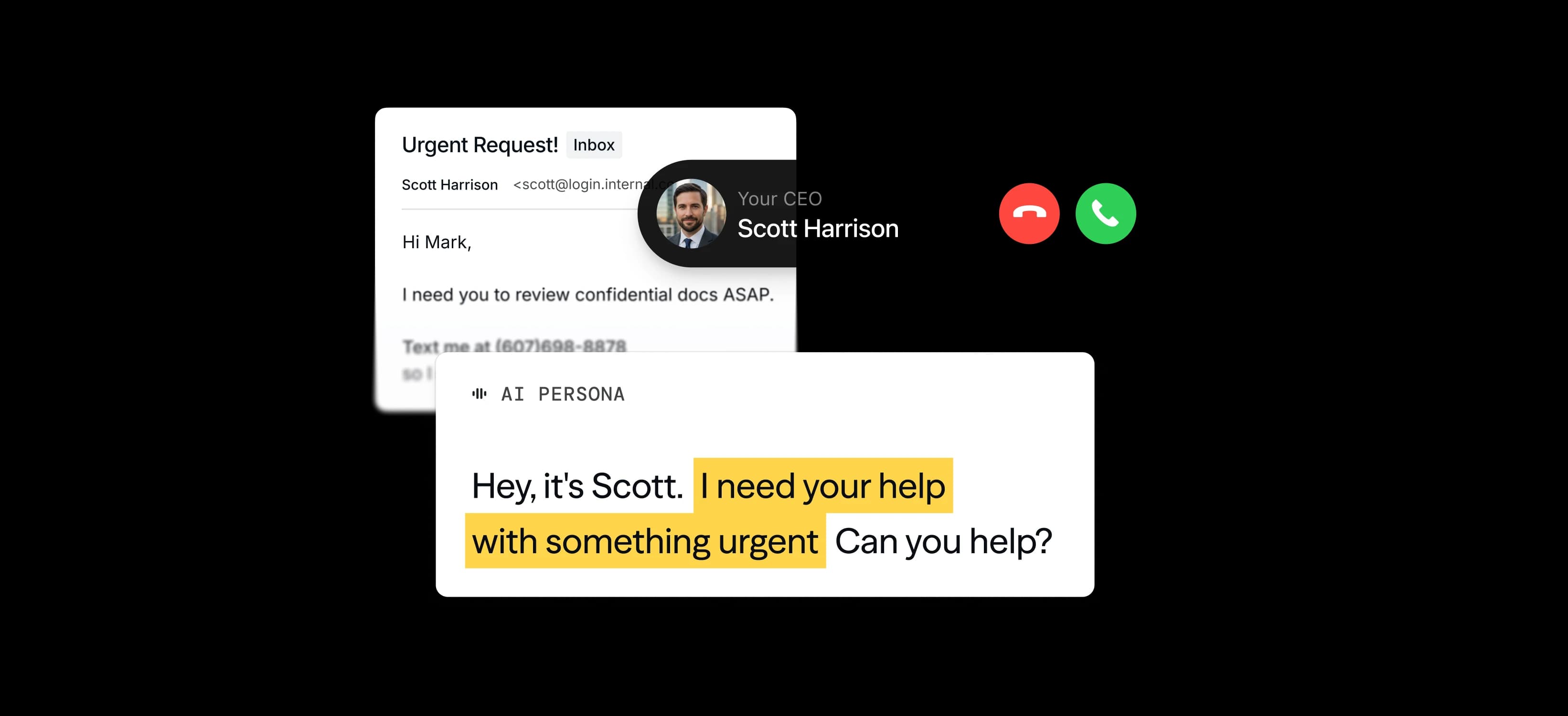
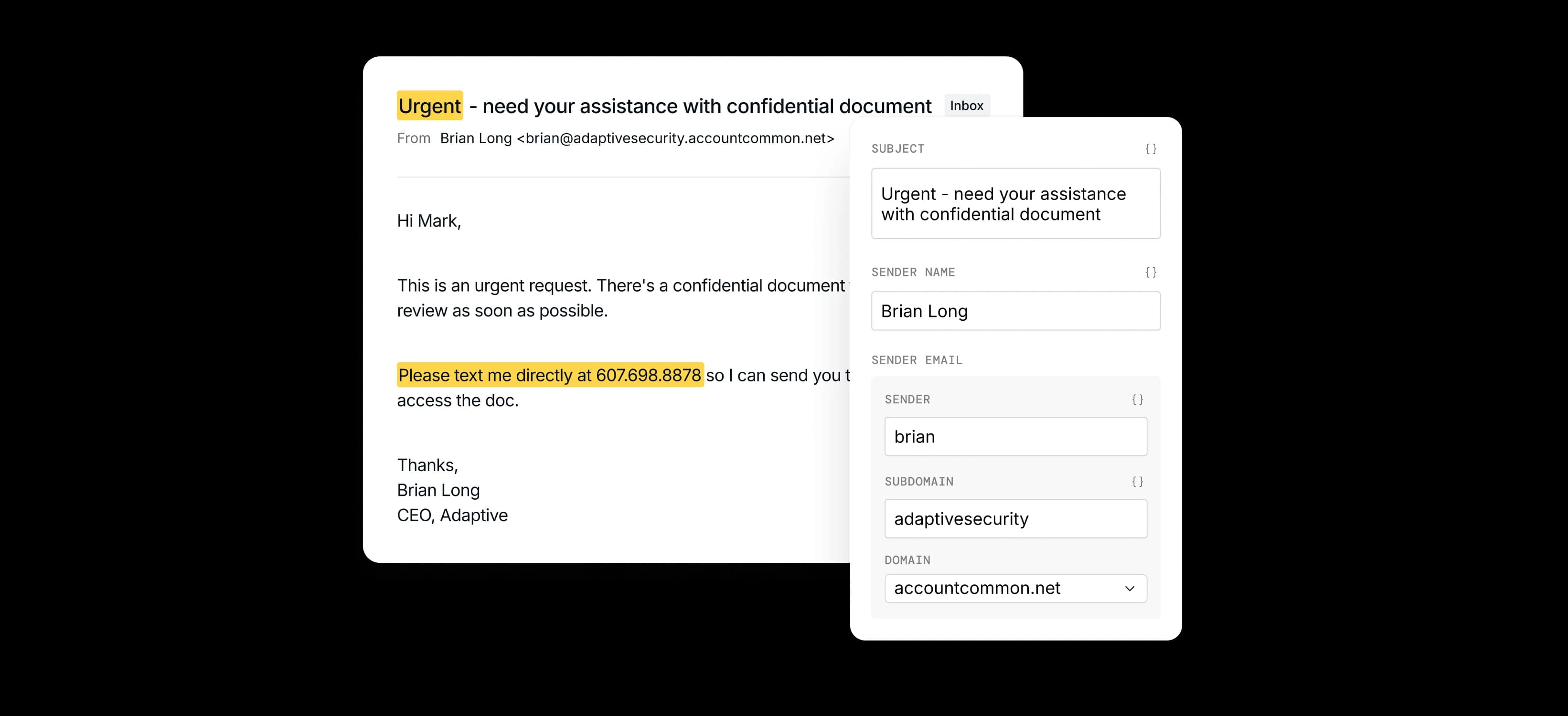
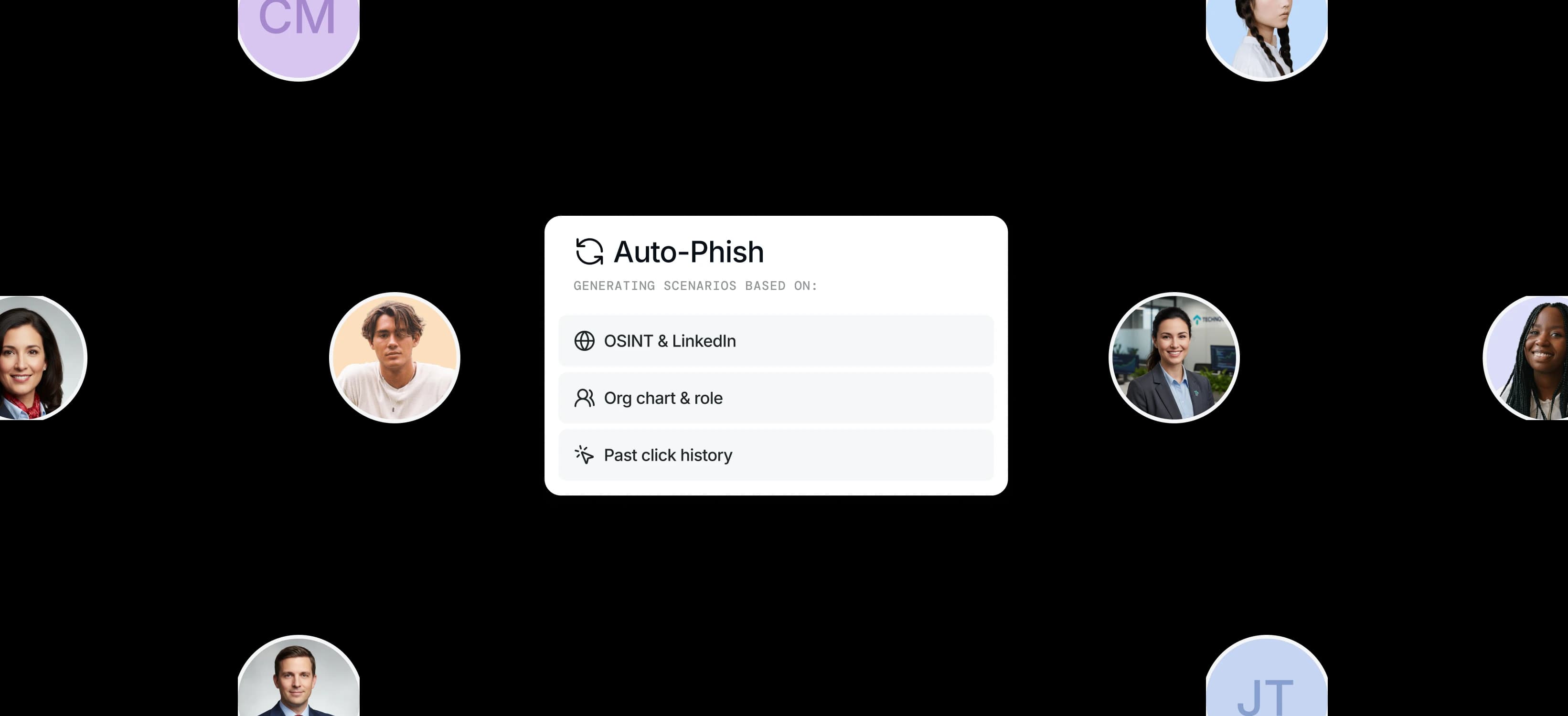
See how it works.
1. Simulate
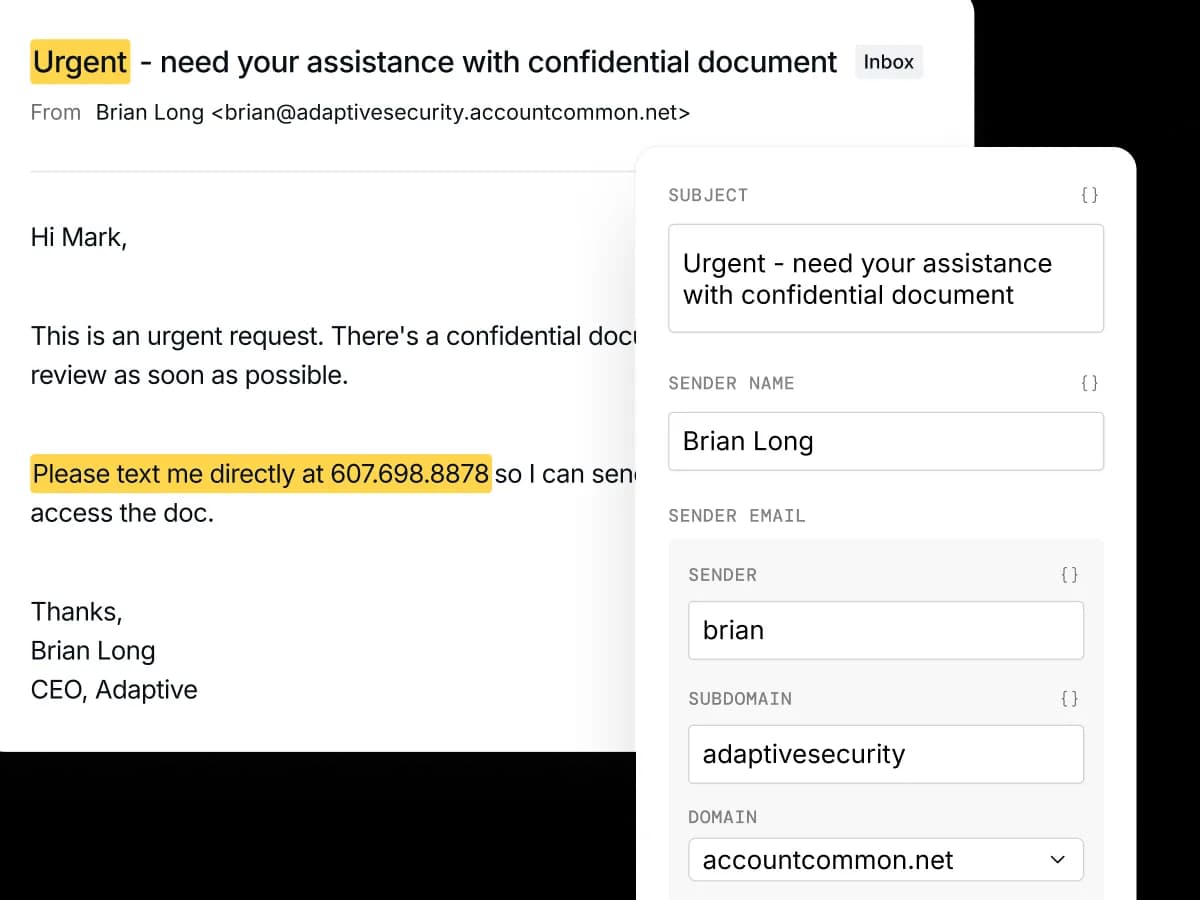
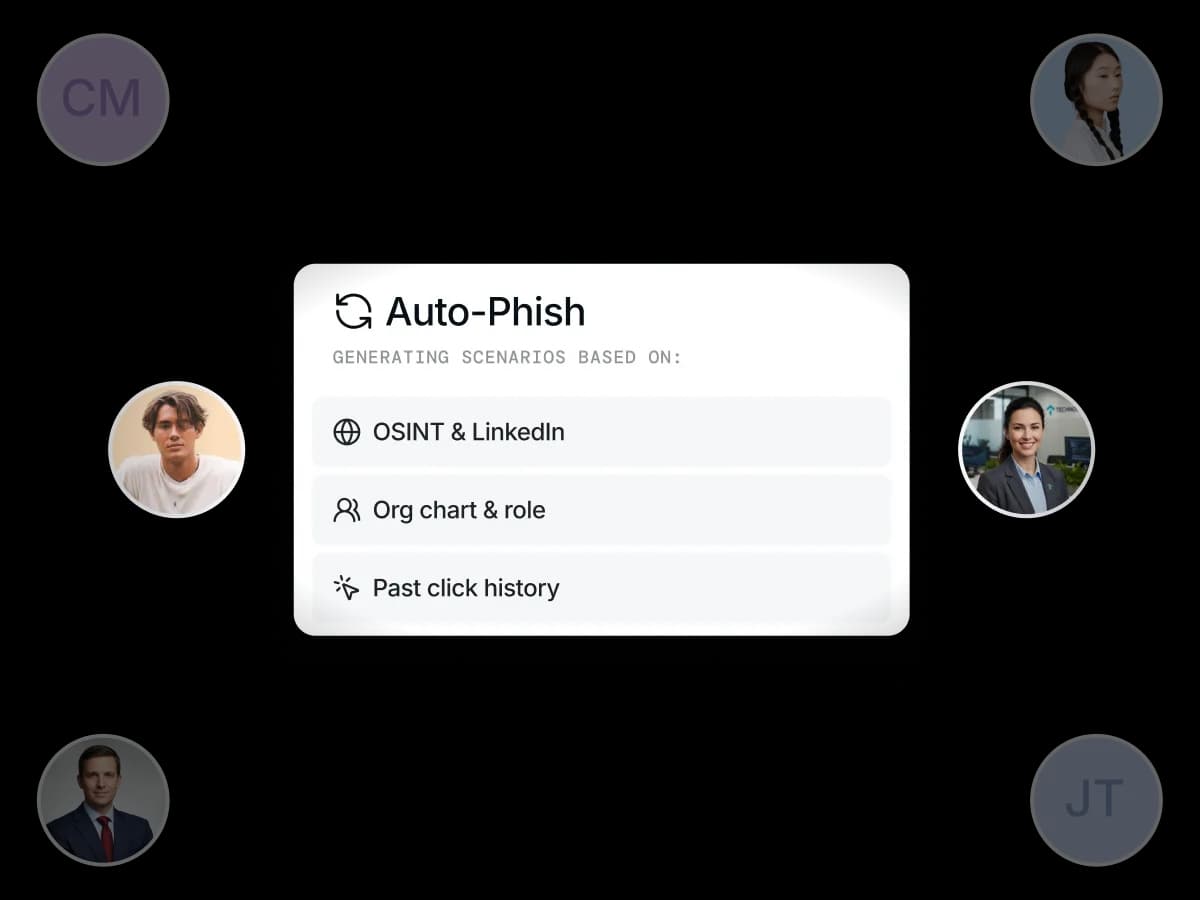
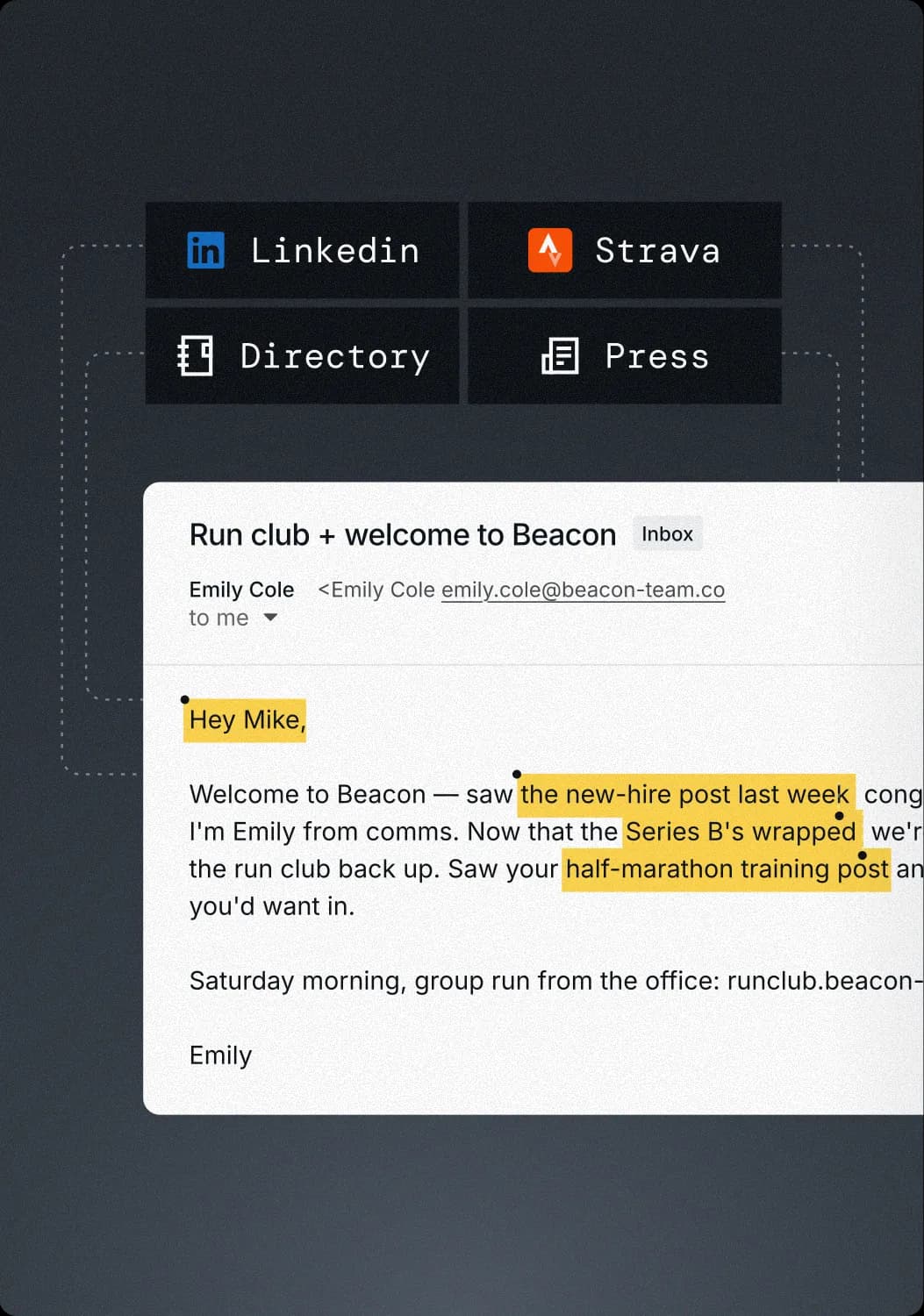
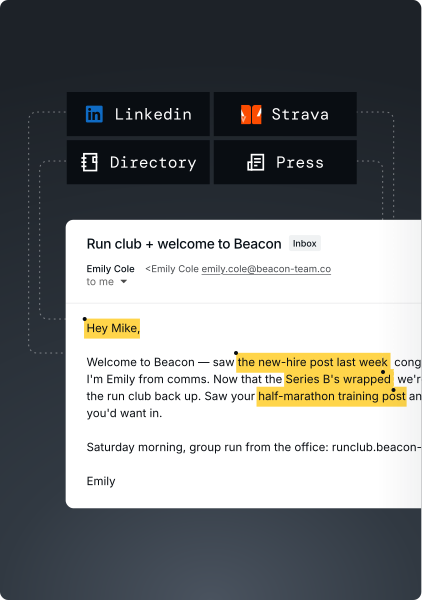
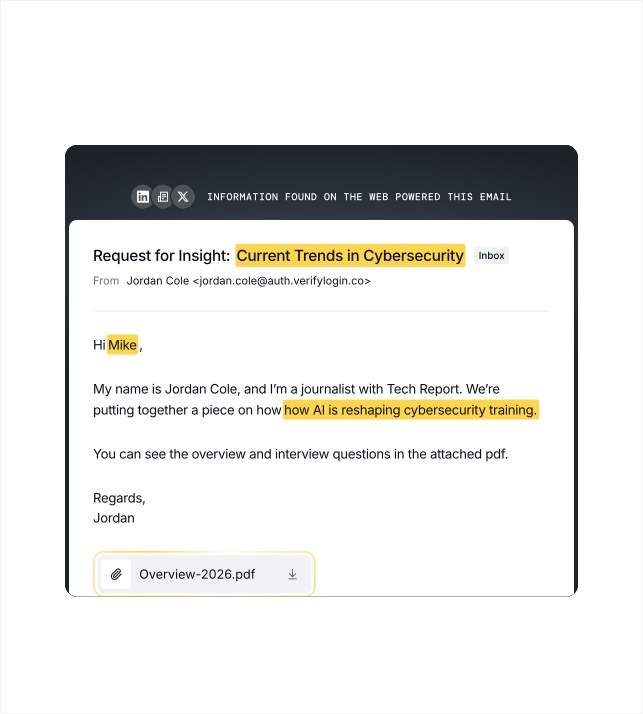
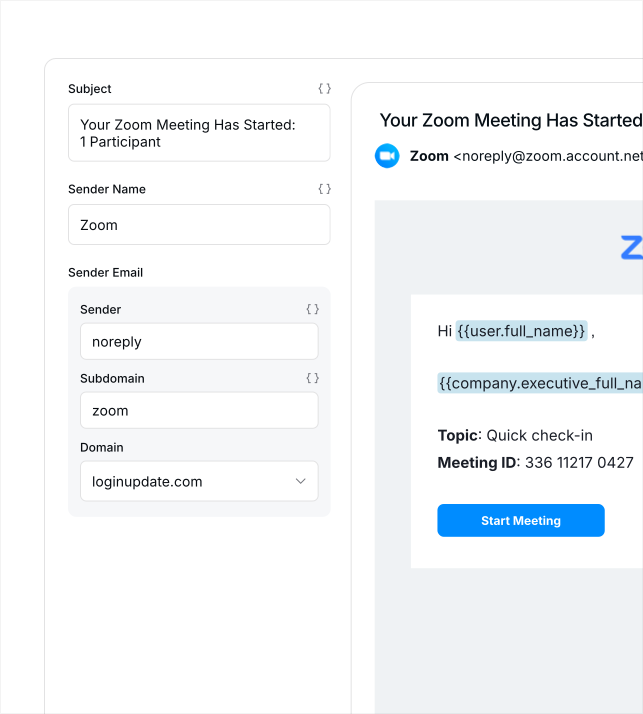
A tailored simulation is generated from real OSINT and sent across the channels attackers use.
Scrape public data on the target
Generate a personalized sim
Deploy across email, SMS, and voice
2. Train
When an employee slips, a just-in-time micro-lesson turns the moment into learning.
Failure triggers a micro-lesson
Content tailored to the miss
Completion tracked automatically
Risk by team
Engineering
84
Finance
56
Marketing
15
3. Monitor
Every interaction rolls up into a per-person and per-department risk score you can report on.
Core risk by person and team
Surface repeat clickers
Report trends to the board


Garrett Olin
CIO, Shasta Community Health Center
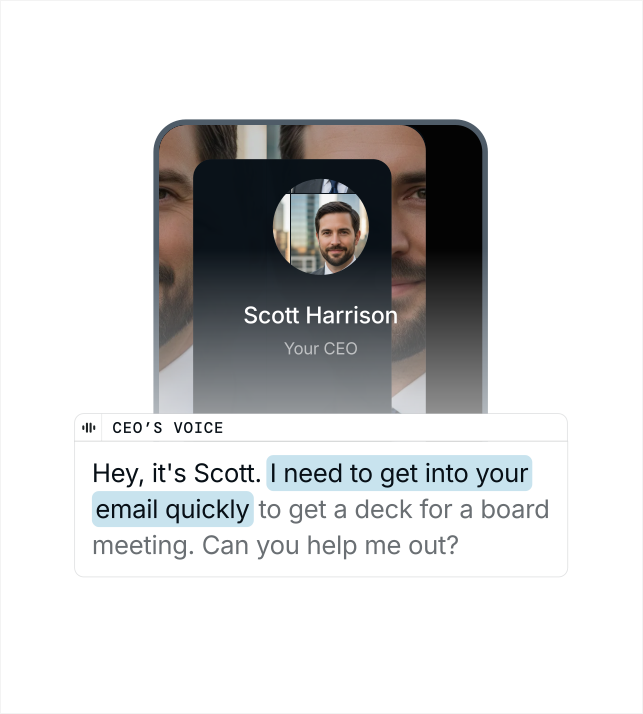
The real eye-opener was the deepfake simulations. When our staff saw and heard a perfect AI-generated video of our own CEO, the threat became real.
Deliver world-class phishing simulations.


Phishing testing shouldn’t work like it’s 2015.
The old way
The adaptive way
Email only
Email, SMS, Voice, & Deepfake
Generic templates
Built and customized in minutes
One-size-fits-all sends
Targeted per employee
Hidden costs
Risk scores that trigger action
Just realistic simulations, generated and scored automatically, across every channel attackers actually use.

