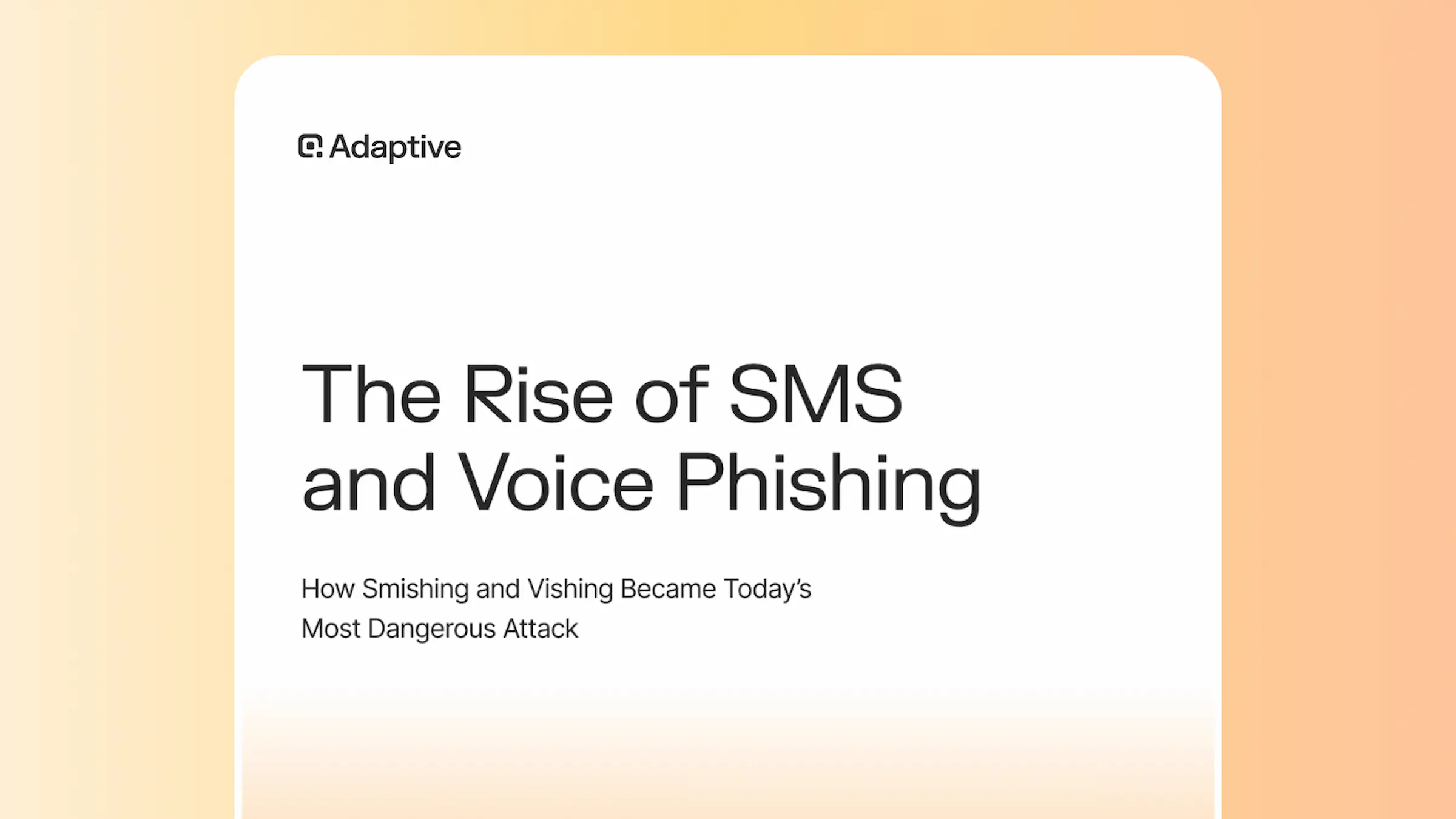
The Rise of SMS and Voice Phishing

How smishing and vishing became today's most dangerous attack vectors.
The FBI reported $16 billion in fraud losses in 2024, with SMS and voice attacks bypassing traditional email defenses entirely. This guide explains why attackers are shifting to mobile-first social engineering—and how to build human-centered defenses that work.

A practical, no-fluff guide tailored for security-conscious teams:

  • Real-world strategies for secure file sharing across teams and clients
  • Step-by-step breakdown of common attack vectors (and how to avoid them)
  • Easy-to-implement checklists for IT, ops, and compliance leads
  • Bonus: Tips on building internal trust around secure communication

Here’s a sneak peek of what’s inside the white paper:

  • Chapter 1: The Modern Threat Landscape
  • A snapshot of current risks and what attackers look for.
  • Chapter 3: The Tools You’re Probably Underusing
  • A refresh on built-in encryption and overlooked features.
  • Chapter 5: Culture of Security
  • How to get your team to actually care (without scaring them).

We're committed to your privacy. Adaptive may use the information you provide us to contact you. For more information, see our

Download Now

You can download our resource now
Download Now
Oops! Something went wrong while submitting the form.

Get Your GuideToday

For information about how Adaptive handles your personal data, please see our Privacy Policy.
You can download our resource now!

What to expect:

  • Understand why smishing and vishing attacks are rising faster than email phishing
  • Learn how AI-generated voices and personalized text scams exploit trust and urgency
  • Discover why traditional security tools fail in mobile-first attack scenarios
  • Get a framework for measuring human risk and building effective training programs
The FBI reported $16 billion in fraud losses in 2024, with SMS and voice attacks bypassing traditional email defenses entirely. This guide explains why attackers are shifting to mobile-first social engineering—and how to build human-centered defenses that work.

The FBI reported $16 billion in fraud losses in 2024, with SMS and voice attacks bypassing traditional email defenses entirely. This guide explains why attackers are shifting to mobile-first social engineering—and how to build human-centered defenses that work.

The FBI reported $16 billion in fraud losses in 2024, with SMS and voice attacks bypassing traditional email defenses entirely. This guide explains why attackers are shifting to mobile-first social engineering—and how to build human-centered defenses that work.

The FBI reported $16 billion in fraud losses in 2024, with SMS and voice attacks bypassing traditional email defenses entirely. This guide explains why attackers are shifting to mobile-first social engineering—and how to build human-centered defenses that work.

The FBI reported $16 billion in fraud losses in 2024, with SMS and voice attacks bypassing traditional email defenses entirely. This guide explains why attackers are shifting to mobile-first social engineering—and how to build human-centered defenses that work.

The FBI reported $16 billion in fraud losses in 2024, with SMS and voice attacks bypassing traditional email defenses entirely. This guide explains why attackers are shifting to mobile-first social engineering—and how to build human-centered defenses that work.

Phishing