Adaptive LogoAdaptive Logo
Backed by OpenAI and NVIDIA
5.0/5
4.9/5
Book a demo
AI-Native Phishing Simulation Platform

Phishing simulations built for AI-powered cyber attacks.

Simulate every attack channel your employees face across email, SMS, voice calls, and deepfakes.

  • checkmark

    Multi-channel simulations across email, voice, and SMS

  • checkmark

    OSINT-powered attacks built from real company data

  • checkmark

    Always-on phishing simulations that adapt to employee's role, risk, and behavior.

G2
4.9/5
GARTNER
4.9/5
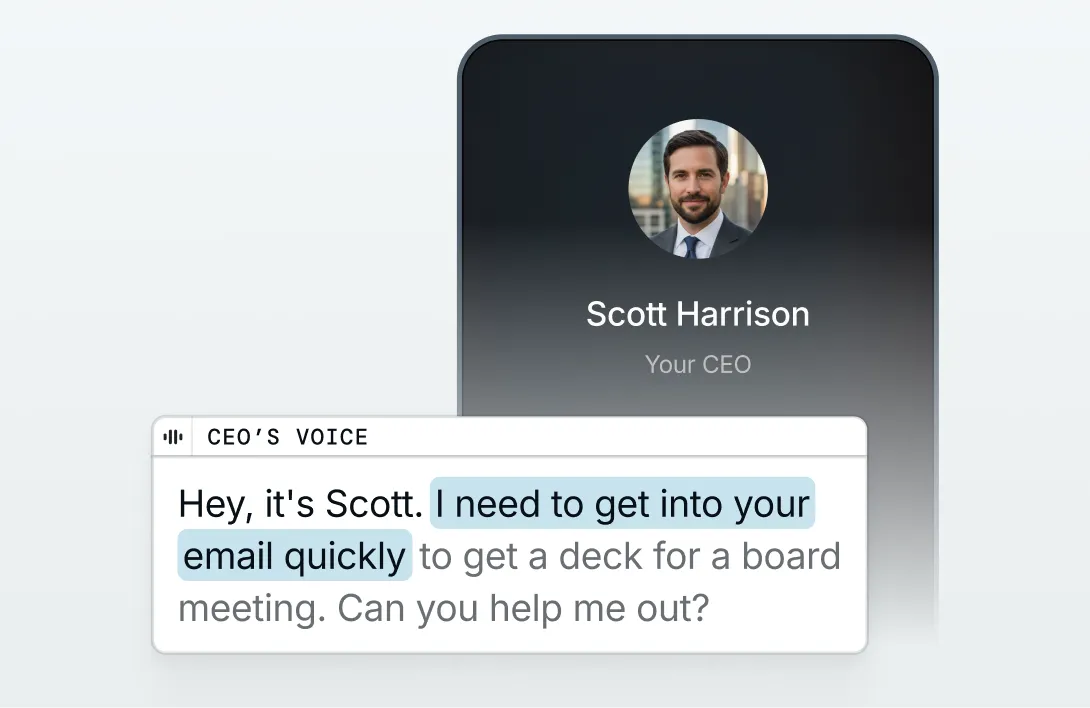
Smartphone screen showing a call from Scott Harrison, CEO, with overlay text highlighting an urgent request for help, alongside blurred phishing email and text messages in the background.
Trusted by 1,000+ organizations worldwide
+4150%
More phishing attacks since ChatGPT’s launch
17x
Increase in deepfake attacks in the US
105k+
Deepfake attacks in US annually
$
1B+
Lost to deepfake and AI-powered fraud last year

Attacks have evolved. Phishing simulations haven't.

Employees pass outdated tests and stay completely unprepared for how modern attackers actually strike.

User interface menu with options for Email Phishing, SMS Phishing, Voice Phishing, and Deepfake video calls.
[1] Single channel
Attackers don't just use email
Legacy platforms only simulate email phishing. The rest of the attack surface goes completely untested.
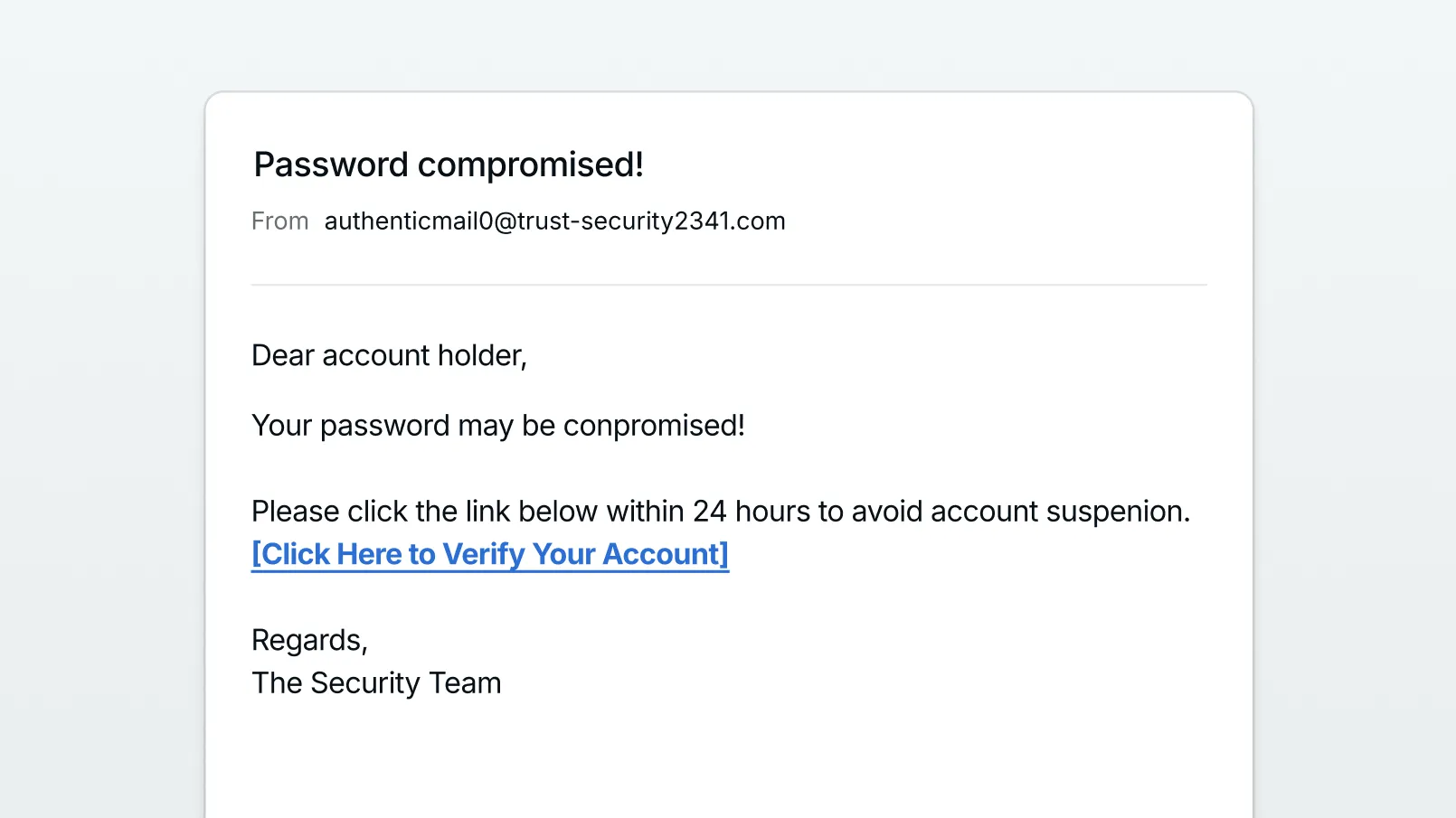
Email message warning of compromised password from authenticmail0@trust-security2341.com, asking the recipient to click a link within 24 hours to verify their account and avoid suspension.
[2] GENERIC TEMPLATES
One-size-fits-all simulations
Generic templates with no targeting by role, risk, or behavior. Employees learn to recognize the test — not the actual attack.
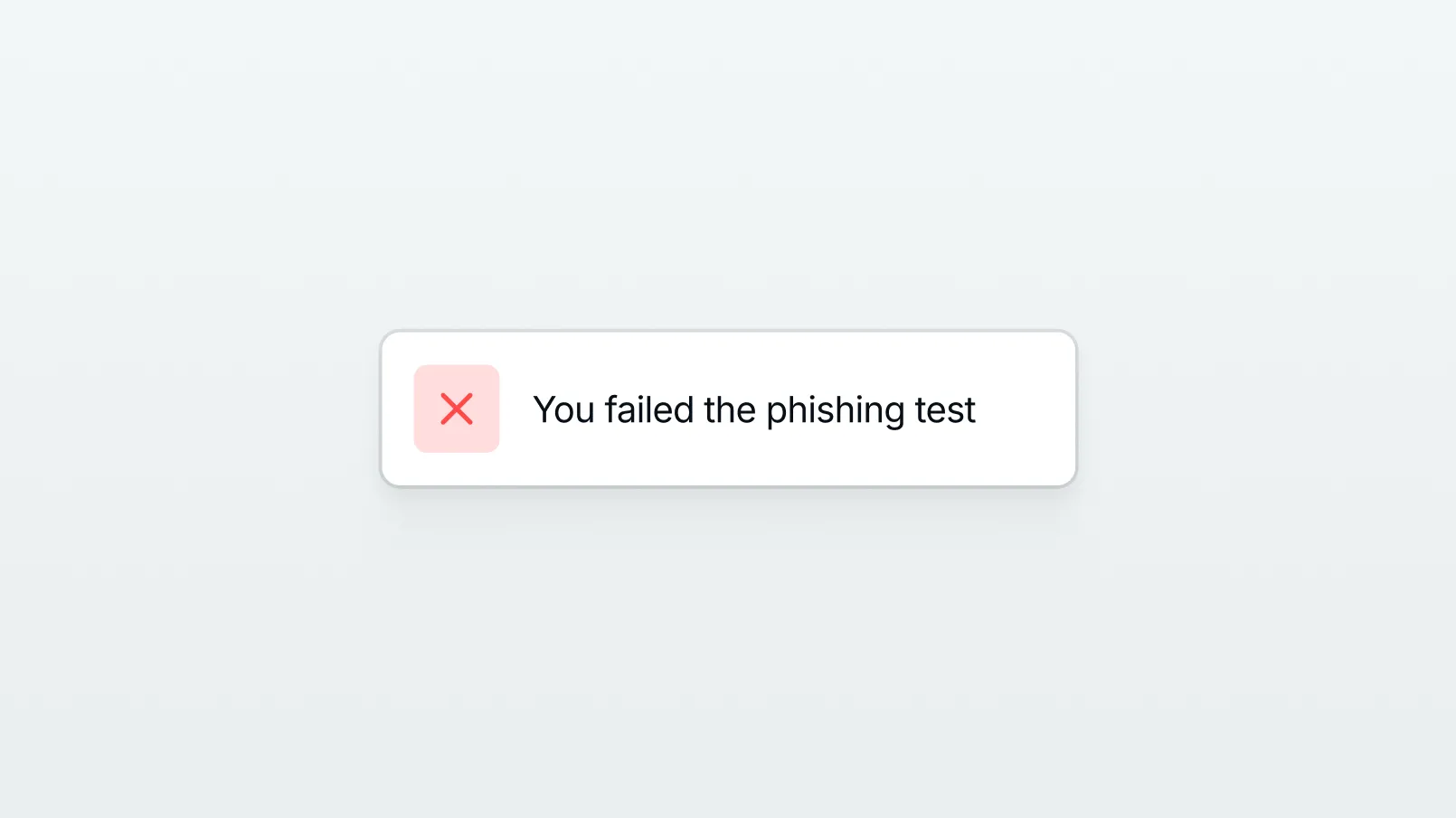
Notification with a red X icon stating you failed the phishing test.
[3] FAILURE WITHOUT FEEDBACK
Failing the test changes nothing
Employees who fall for a test walk away without knowing why or how to do better. Behaviors don’t change, and the risk stays.
Bar chart comparing Managing Simulations, Reporting & Compliance, and Improving Security, with Managing Simulations having the highest value shown in red lines.
[4] manual effort
Constant maintenance
Security teams spend more time managing simulations than actually improving security.
start free

Hyper-realistic phishing simulations powered by AI.

AI powered simulations built to train against real attacks.

Multi-channel, hyper-personalized phishing simulations that adapt to every employee and run automatically from day one.

Three simulated phishing messages: an email warning of unusual sign-in activity asking to verify account, a phone call from IT Help Desk requesting credential verification, and an SMS from IT Support asking to reply with employee ID to secure account.
"The deepfake simulations were a huge wake-up call. They fundamentally changed how our employees think about social engineering."
Ben Porter
IT Director

Realistic phishing simulations powered by AI.

Built to simulate the attacks your employees actually face.

Phone screen showing an incoming call from Scott Harrison, CEO, with message overlay: 'Hey, it's Scott. I need your help with something urgent. Can you help?' along with blurred email and text messages in the background about an urgent request.
simulations for every channel
Multichannel phishing
Simulations move across various communication mediums with BEC and vendor impersonation scenarios.
Email from Jordan Cole requesting insight on current trends in cybersecurity, mentioning an attached PDF named Overview-2026.pdf.
OSINT-Powered Spearphishing. AI and open-source intelligence generate targeted spearphishing emails shaped by your public signals and data.
Smartphone screen showing a message from Scott Harrison, 'I need to get into your email quickly to get a deck for a board meeting. Can you help me out?'
Custom AI Persona. AI voice personas modeled on your executives deliver convincing calls, voicemails, and callback requests to simulate vishing scenarios.
Simulate without compromise.
2800+
Pre-built scenarios
170+
Vendors available
40+
Languages supported
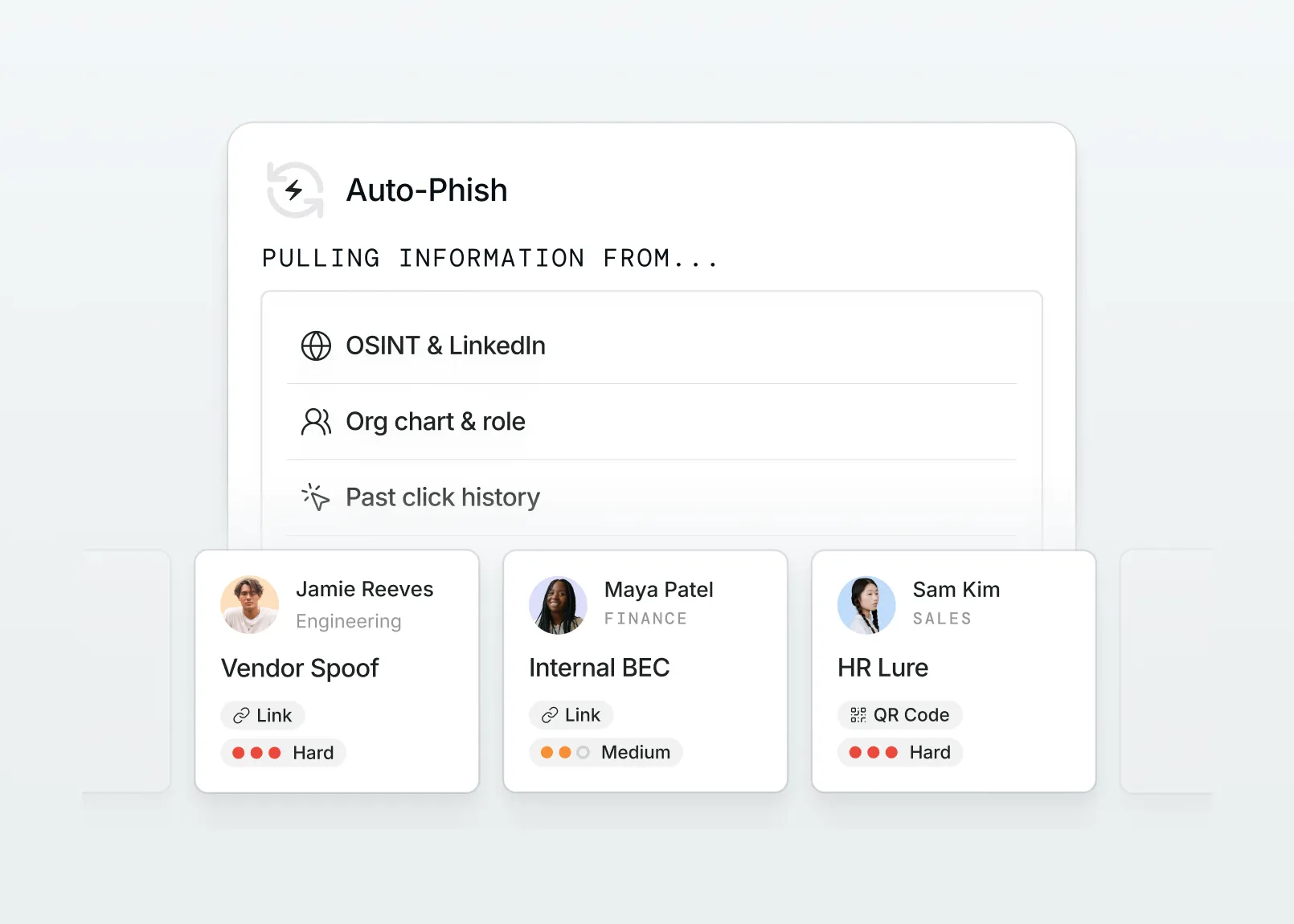
Auto-Phish dashboard showing information sources OSINT & LinkedIn, Org chart & role, Past click history, and three phishing scenarios: Vendor Spoof by Jamie Reeves (Engineering) labeled Hard with Link, Internal BEC by Maya Patel (Finance) labeled Medium with Link, and HR Lure by Sam Kim (Sales) labeled Hard with QR Code.
Auto-phish simulations
Simulations run continuously, with role-based targeting and dynamic scenario generation.
User profile of Mark Scott in Engineering marked as high risk with a risk score of 75 and triggering a remediation campaign offering Python and C# Security Training, Spearphishing Simulation from AWS, and Social Engineering Intro Training.
Automated remediation
Remediation training triggers on failure and targets repeat offenders based on behavior or risk score.

Simulations across every channel, target, and tactic.

Comprehensive coverage across every attack scenario, from vendor impersonations to department-specific threats.

Emerging Threats

Simulations for AI-generated attacks, smishing, vishing, QR code phishing, and multi-channel scenarios.

Business Email Compromise

Convincing impersonations of executives and internal staff to test responses to urgent, authority-based requests.

Vendor Impersonations

Scenarios built around the vendors, brands, and trusted tools employees interact with every day.

Department Threats

Role-specific scenarios targeting the attacks most likely to hit each department, from financial fraud to credential harvesting.

Adaptive vs. Legacy SAT.

What modern phishing simulation looks like against platforms that haven't kept up.

capability
Gen-AI phishing
  • checkmark

    2800+ simulations

  • x icon

    Old, stale scenarios

  • x icon

    Outdated

AI Voice and SMS phishing tests
  • checkmark

    Features AI personas of executives

  • x icon

    Does not offer

  • x icon

    Does not offer

New scenario creation
  • checkmark

    Create your own scenarios

  • x icon

    Does not offer

  • x icon

    Limited customization

Vendor impersonation
  • checkmark

    With custom email & spoof pages

  • x icon

    Does not offer

  • x icon

    Basic impersonation

Multi-channel impersonations
  • checkmark

    Across voice, SMS, and email

  • x icon

    Does not offer

  • x icon

    Does not offer

Automated phishing simulations
  • checkmark

    With dynamic scenario generation

  • x icon

    Does not offer

  • x icon

    Does not offer

Gen-AI phishing
2800+ simulations
×
Old, stale scenarios
×
Outdated
AI Voice and SMS phishing tests
Features AI personas of executives
×
Does not offer
×
Does not offer
New scenario creation
Create your own scenarios
×
Does not offer
×
Limited customization
Vendor impersonation
With custom email & spoof pages
×
Does not offer
×
Basic impersonation
Multi-channel impersonations
Across voice, SMS, and email
×
Does not offer
×
Does not offer
Automated phishing simulations
With dynamic scenario generation
×
Does not offer
×
Does not offer
“Adaptive is a unique solution in a space that has lacked innovation for too long.”
IT Director, Podium
“Adaptive bridges the gap between corporate training and personal relevance.”
Security Analyst, Lennar
“When we first saw Adaptive’s deep fake capabilities, we shared the platform with our board.”
SVP IT, First State Bank

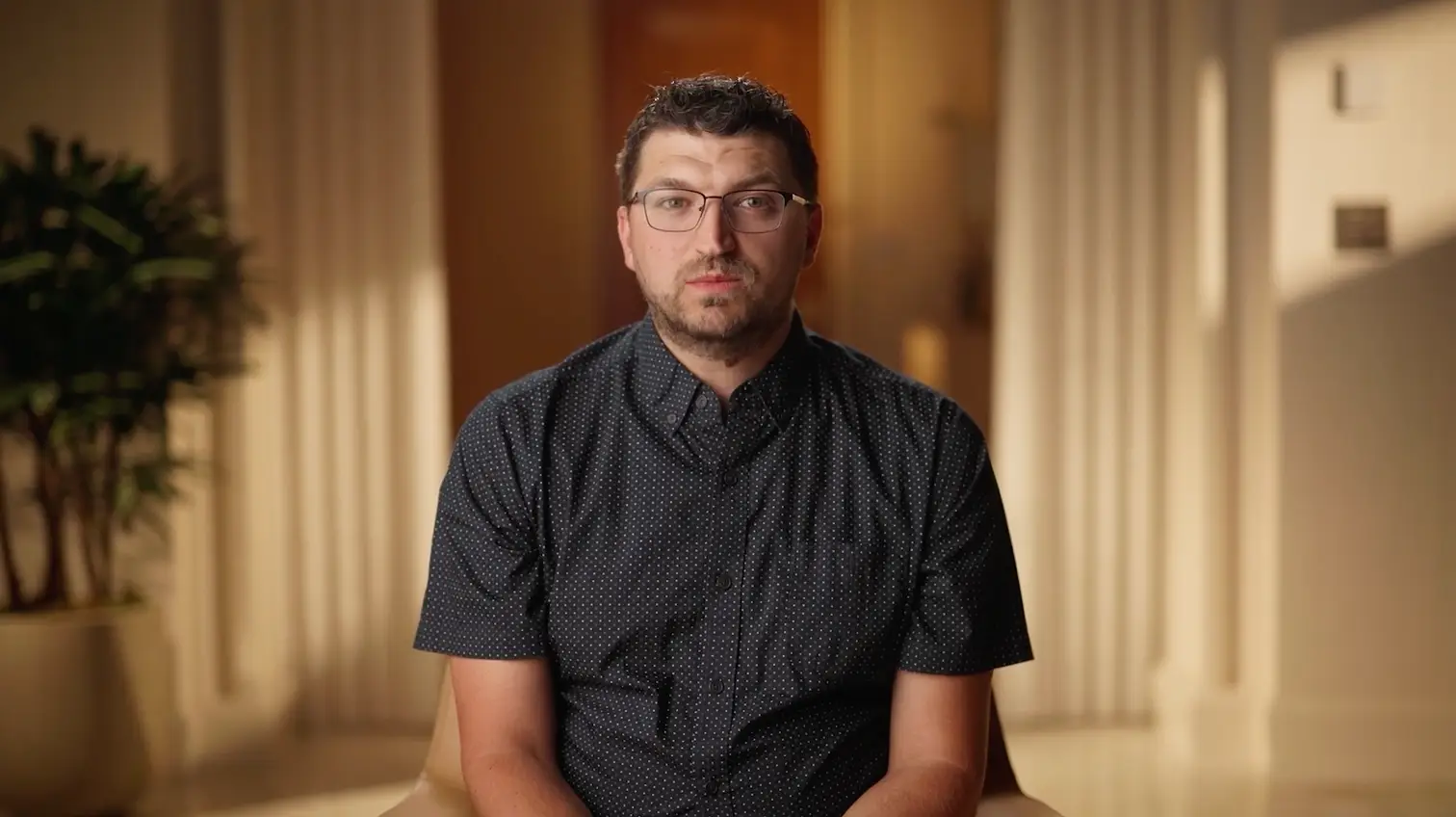
Hear why security leaders trust Adaptive.
Phishing simulations for your industry's specific risks.

Different industries face different threats. Adaptive trains employees for what is specific to theirs.


Modern office with people working at desks illuminated by hanging light bulbs at night.
Train for attacks targeting tech organizations. Credential harvesting, SaaS impersonation, and spearphishing scenarios built around the tools and systems your teams rely on.
Female doctor smiling and talking to a worried mother and her young daughter sitting on a sofa.
Protect your patients by preparing your people. Phishing scenarios built around the workflows and vendors your clinical and administrative teams interact with daily.
Two professional women discussing information on a tablet in a modern office setting.
Prevent costly breaches and reduce fraud risk. Simulate BEC, wire fraud, executive impersonation, and credential phishing across every financial function.
Two customer service representatives wearing headsets and typing on laptops in an office.
Build resilience against attackers targeting sensitive data. Simulate social engineering, vendor impersonation, and other scenarios built around the customer data, systems, and interactions your teams manage every day.
Two businessmen reviewing documents at a table in a professional meeting room.
Prepare your teams for threats targeting the public sector. Phishing, smishing, and social engineering scenarios built around credential attacks, vendor impersonation, sensitive personal data, and more.
Modern open-plan office with employees working at desks with multiple monitors, large windows with a city view, and seating area with armchairs.
Defend against the threats targeting high-stakes investment environments. Targeted scenarios built around wire fraud, executive impersonation, credential attacks, and more targeting investment roles.
Four colleagues in a modern office having a meeting, with one person pointing at charts on a wall screen and another talking near a whiteboard with diagrams.
Prepare against phishing threats across any industry. Phishing scenarios across email, SMS, and voice that adapt to any organization, role, or threat surface.

Frequently Asked Questions.

What is a phishing simulation?

A phishing simulation is a controlled test that mimics real-world phishing attacks to evaluate how employees respond. It identifies risky behaviors like clicking malicious links or sharing credentials and turns those moments into training opportunities that improve cybersecurity awareness over time.

Why are phishing simulations important?

Phishing simulations are important because they measure real employee behavior, not just knowledge. They show who is likely to click, share credentials, or report suspicious activity, giving a clear picture of human risk. They also reinforce learning through experience. Simulated attacks create immediate, practical training moments that improve awareness and decision-making over time. Finally, they provide measurable data. Teams can track trends like click rates and reporting behavior to identify risk and strengthen overall security.

How does an artificial intelligence phishing simulation work?

An artificial intelligence phishing simulation uses generative models to write phishing emails that mirror the attacks real threat actors send, personalized to each employee's role, department, recent activity, and public profile. Unlike legacy phishing testing software that ships with a library of fixed templates, Adaptive's artificial intelligence phishing simulation crafts unique lures on demand, including deepfake voice calls and AI-generated text messages.

How often should phishing simulations run?

Phishing simulations are most effective when run continuously. Many organizations test employees monthly or more frequently for high-risk roles, reinforcing awareness through repeated exposure.

Do phishing simulations include deepfakes, vishing, or smishing?

Yes. Modern phishing simulations can include email, SMS (smishing), and voice-based attacks (vishing), as well as deepfake impersonation scenarios. This ensures employees are prepared for threats across multiple channels.

Book a demo today
For information about how Adaptive handles your data, please see our Privacy Policy.

Human risk is an organization’s biggest cybersecurity gap.